¿Cuál es la prisa?

Me encuentro sentado

      esperando un café
afuera, la guerra continua

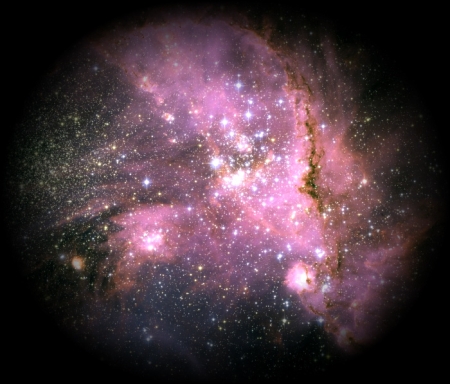
     en las alturas lejanas las galaxias se trituran unas a otras

sabes, como cuando una tragedia se aproxima

 y no hay acción, sola una lenta espera

       hasta que el momento anticipado llega-

estoy mirando – esto tan eterno

           y la lucha sigue afuera, la gente corre

la gente se tropieza y se arrastra hasta un árbol

        míralos
pienso en silencio.

Que difícil ser hombre,
       como lucha contra sí mismo  
resiste, tembloroso a mirar el vacío que rellena tanto terreno.

    El café llega y mi vecino corre espantado del silencio de mis ojos
¿tan difícil es: detenerse?  Dejar que las cosas sucedan por sí solas…

        Anduve ayer por la llanura,
un llano quieto, un cambio despacio – la niebla pronuncia sílabas
                                                                           en décadas
el monte crece como mi barba, quién los detiene;
            ayer era como el agua transparente
un rocío sin destino previsto: evaporarse solo si calienta el día

Espérenme, ya terminé mi café
      ya me sacudo mi camisa
salgo por la puerta        
        y me pondré a correr con ustedes

Pero nadie todavía me ha respondido: ¿Cuál es la prisa?

Poemas Nihilistas

Breathe

Breathe, quite slowly…

as you caress the dim surface

follow the curves, the missing parts

again, were we incomplete

unfinished as anything in time

are you still living this minute?

I cannot blame you,

let’s wait a while… the rain may pass

it’s fine to be weak – fear is homely

that hour may come, later tonight

after so many things have torn us apart

let’s wait, cocoon life

we may soar imperfectly, rottenly

there is no choice;

live this fate

frailly fly soon

when the rain has stopped,

when the soil is dry

so we can take off … again

Innumerables silencios

Innumerables_silencios

Estrellas son innumerables silencios,

     tan mudas,

historias distantes envueltas en silencio

         una grandeza inhumana

sin propósito…

      llegamos hasta este instante en el flujo

a  través de milenios

       murieron los hombres por una causa mayor

una fe intratable

           como si su misión se cumpliera en el futuro

un momento culminante para el que todos vivimos
pero anoche me senté a mirar las estrellas

     tantas de ellas, tantas como los deseos inacabables del humano

y el mundo sigue persiguiendo ese apogeo histórico

      el momento donde todo el sufrimiento, la agonía, la locura

se justifica con un orgasmo divino

            nuestras oscuras vidas iluminadas con ilusión de un propósito

¿Dónde?

             ¿Por qué proyectar al futuro ese infantil capricho?

Queremos gozar de una trascendencia, un sentido

        un porvenir decisivo

             pero no existe ninguno, nada: excepto el vasto vacío del espacio

           nada, excepto el proceso interminable de este mismo instante,

nada, pero esas lucecitas voraces denominadas: estrellas.


Poemas Nihilistas

Famous and rare modern art paintings at Statens Museum for Kunst, Copenhagen-Denmark

The National Gallery of Art in Copenhagen (Denmark) has a very special collection of famous painters, such as Pablo Picasso, Henri Matisse, Andre Derain, Georges Braque and many others. Some of these works are classics of modern art while others are rare, seemingly paint sketches, of these great artists.

The museum itself is no longer free (120 DKK), and has mostly European artists with an emphasis on Scandinavian painters. Modern art paintings are on the top floors of this Danish museum.

Munch_Death_Struggle
Edvard Munch, Death Struggle 1915
Norwegian Painter

Hammershoi_Female_Nude_1889
Vilhelm Hammershoi, Seated Female Nude, 1889
Danish Painter

Peder_Severin_Kroyer_Boys_Bathing_at_Skagen
Peder Severin Kroyer, Boys Bathing at Skagen. Summer Evening, 1899
Danish Painter (Badende drenge en sommeraften ved Skagens strand)

Carl_Block_Samson_Philistines
Carl Bloch, Samson and the Philistine, 1863
Danish Painter (Samson hos filistrene)

Henri_Matisse_Landscape_Colliure_joy_life
Henri Matisse, Landscape near Collioure. Study for “The Joy of Life”, 1905
French Painter

Matisse_portrait_madame_matisse_green_line
Henri Matisse, Portrait of Madame Matisse. The Green Line, 1905
French Artist

Matisse_nud_e_white_scarf
Henri Matisse, Nude with a White Scarf, 1909
French Painter

Matisse_goldfish_french_1912
Henri Matisse, Goldfish, 1912
French

Matisse_still_life_nutcracker_1916
Henri Matisse, Still Life with Nutcracker, Ca 1916
French

Henri_Matisse_young_woman_looking_sea
Henri Matisse, Young Woman Looking at the Sea, 1923
French

Henri_Mattisse_pink_onions_1907
Henri Matisse, Pink Onions, 1906-1907
French

Henri_matisse_odalisque_with_screen
Henri Matisse, Odalisque with a Screen 1923
French

Henri_matisse_Odalique_1923
Henri Matisse, Odalisque, 1923
French

Andre_derain_woman_chemise_1906
André Derain, Woman in a Chemise, 1906
French Painter and illustrator
Co-founder of Fauvism with Matisse

Andre_derain_church_carrieres_seine
André Derain, The Church near Carrieres-sur-Seine, 1909
French

Georges_Braque_harbour_estaque_1906
Georges Braque, The Harbour at l’Estaque
French Painter, renown for his work in Cubism along Picasso.

Georges_Braque_metronome_1909
Georges Braque, The Metronome, 1909
French

Georges_Braque_trees_at_estaque
Georges Braque, Trees at l’Estaque, 1908
French

Georges_Braque_Melon_Fruits_Cup
Georges Braque, Melon, Fruits and Cup, 1925
French

Jean_metzinger_woman_with_horse
Jean Metzinger, Woman with horse, 1912
French Painter, inspired by Fauvism and Impressionism but known for his Cubism.

Fernand_leger_woman_vase_1924
Fernand Léger, Woman with Vase, 1924
French painter, sculptor, filmmaker

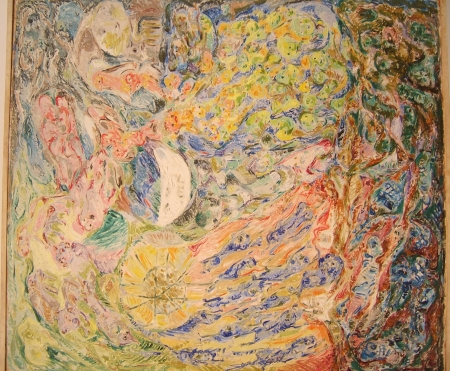
Asger_Jorn_danish_wheel_life_suite_seasons
Asger Oluf Jorn, The wheel of life -January Picture from the Suite of Seasons, 1953
Danish Painter

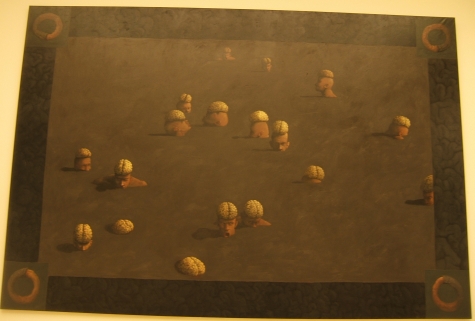
Michael_Kvium_power_of_thought_1991
Michael Kvium, The power of thought, 1991
Danish Painter

Pablo_picasso_glass_lemon_slice
Pablo Picasso, Glass with Lemon Slice, 1913
Spanish Artist

Hope you enjoy all these modern art paintings, I will keep posting the best works of art from best museums around the world.

Return to Art and Poetry

An undesirable confession

An undesirable confession


                (or lack of conformity)

There are no guidelines. Understand this sentence, remember it daily – it is essential to the journey of life. There have never been any guidelines. If ever a semblance of direction has been portrayed by some ideology or religion, it is only an attempt at a guideline. It is not certain, not even provable. Every faith in a transcendental code by which we can live our lives is today being un-made, perhaps only because it was originally man-made. We are lost, forsaken in the remote chaos of a lonely planet, with no guiding hand that would lead us to any certainty – to any firm truth.


I set these words forth not in the spirit to challenge those that are able to find comfort in this oppressive world; on the contrary, I report only the widespread experience of constriction and confusion that is rooted in the mind of 21st century Homo sapiens. I am wholly willing to commit to the idea and passion of a benevolent god or cosmic purpose, something which will deliver the long-sought peace that most of us have been searching for. Yet, the more intense the search, the horizon of faith turns darker and frailer. How can I believe in something I don’t feel? – this is the question that exiles us into metaphysical orphanage. No matter how fervently we search for that ultimate reality, the journey is always daunting, constantly haunted by self-doubt, fear and irrational panic of that impenetrable unknown which is the substratum of our everyday lives. So the desire of guidance, the search for something greater than one’s self, is suspended and there remains only a perception of enclosure – a trap in which we all belong.


So, once the awareness of the impossibility of escape is made clear, should we assume our defeat? Should we not analyze the environment of our perplexity and express the conditions of our despair?


What exactly is our trap, what constrains us to impotence? I am only one more man lost in the maze, able only to postulate wild theories of decay. But here are my thoughts:


Insecurity shapes our early life. We depend extensively on the care of our parents until we become sufficiently independent to take care of ourselves. From the very start we look for something beyond ourselves to help us deal with our hostile environment and to give us the comfort of control; control over the unpredictability of the world. By the time we reach the age of reason we are accustomed to depend on other sources, whether it’s our parents, god or social institutions. Naturally these fall short from achieving this and we return to our capsule of solitude. Even the most passionate advocates of religion shudder in fear – didn’t Jesus himself before his death utter words of irrevocable loneliness? (My God, my God, why hast thou forsaken me?)


Now, what I’m about to expose may seem far-fetched, perhaps there are a few arguments I have skipped to reach the end. The emptiness felt from this lost of trust in the original sources of comfort (parents, religion, social/political establishments) needs to be fulfilled. That’s when a new monument is erected; an indestructible idol substitutes our previous dependence and consolidates itself as the last resort. What is this new idol?


Very simply: a rôle. We fashion a rôle for our lives, an identity of what we should be that is safely kept within and no longer outside. A phantom so powerful it literally controls the direction of our lives. But how did we substitute external comfort for internal obligation? Weren’t we already terrified of our loneliness that we begged for a new sense of communal belonging? We coil within ourselves because we feel disappointed about the outside world, finding it untrustworthy. We need to believe in something and the only thing that came to fill this part was our artificial identity. We created a set of standards, goals and principles by which we guide our lives, something that could not be shaken up very easily and could stand the erosion of change.


Our subconscious harbors this identity which is so elusive we suddenly lose track of its agenda – our original choices are forgotten but they mark the remaining course of our lives. We become slaves to our rôle which was initially fashioned to give us comfort but now only oppresses us with the urgency of its fulfillment. It is a double-bind, we are trapped by our desire to feel valuable, significant or united to something greater than us but we have not found this in our modern lives. We then submit shamelessly to the commands of a career which mortifies us with achieving more and more; exhausted by the end of the night our lives feel empty, confused, lost in innumerable desires.

This sense of urgency comes about from the competition we experience every day. Competition for a better role, a more reputable identity. Deep down we are all celebrities to our own egos and because of this we yearn to become as celebrities to others. Frankly, however, we wish others to see us as we want to be, but not as we truly are. We compete blindly with each other to create the “better” person, whatever this is. There are no universal standards by which we can judge who is a better person, it is relative to the values of each human being. 


This competitiveness is best seen in large cities. Cities are breeders of competition, urging its inhabitants to outrun each other. The conveniences that a city provides to its dwellers are irrelevant compared to the pressures and hostilities it creates. A decisive change of perspective is urgently needed: that of de-urbanization. How long can human beings last in a state of high tension, when large concentrations of men and women fight daily, physically and psychologically, to be on top? The greatest concern is, do they even know why they are bustling about?

What if this is true? We regard ourselves too highly during the day but then return unsatisfied to bed; panicky with the feeling that we have no control and even our goals in life are to be doubted. The idol of the ego must inevitably fall too, leaving us naked in despair, gagging with the question: who am I?

¿cómo callar?

Relámpago en la lejanía

     crea el celaje de mi circunstancia

el deseo es una ceguera

     una única trayectoria

donde existen miles

Haz en mí lo que debes

   mútame hacia lo incomprensible

porque mi anochecer

   cae como una nota grave

       al final de una descuidada orgía

porque cada letra escrita

      es en el fondo un poema entero

y si cada nube merece una sinfonía

   cada partícula de polvo

       cuenta una odisea

¿cómo callar?

Anclados en cada pozo negro

   -es cierto-

      el aislamiento trae seguridad;

cómo se siente ser ráfaga,

   la voz que ama el silencio

los labios que adoran lo innombrable

          ¿cómo era todo cuando nada importaba?

-es cierto-

  hay un instante, una cortina

un rostro escondido en el bosque

    ese recuerdo inasequible

sabría cantar, palpitar ese encanto

        el refugio del tacto…

dos manos en forma de copa

                        ¿ya cayó la gota?

Regresar a pagina principal

Nightmare’s Pendulum

I am constantly disappearing…

   echoing faint voices, distant howls

together with dust

       together with silence’s gaze

watching the black oblivion hanging

                       like a nightmare’s pendulum

on these modern walls


            ask yourself now

should we celebrate our meaninglessness

             or despair from our short-lived sojourn
Are these darkest skies, games to play


        the cries of hunger and misery – unreal songs

spoken winds from distant tribesmen


               light, weightless
as unchanging light-bulbs circled by ghostly moths


         humans are mist

shallow shadows built to dream

                   and float about unending abysses


so close to the edge of madness – mothers reply

      hold my hand, while we both come undone

consumed by the selfless void, our friend eternally:


                         wasteland of forms

como tú y yo.

Siempre fue parte de todo

entera partícula

él era un hombre vivo y mortal

valiente y cobarde

contento con su pequeño rincón

común hermano de las noticias

era

al fin y al cabo

uno más

una partícula íntegra

respirando

dejando el tiempo hacer lo suyo

pues era un hombre

de piel y sueños

capaz de asombro y aburrimiento

un colmillo feliz

y una barba espesa

era aquél

una figura más que jugaba

reía de las nubes

lloraba, como otros, en las noches

era, al fin y al cabo,

como tú y yo.


Poesia nihilista

A view of Amsterdam — nihilistic photography

Photographs  and pics of Amsterdam, (Netherlands)… of what I usually call, beautiful  irrelevancies. In chronological order, as they were experienced.

Copyright 2009, Pablo Saborio.

More art and poetry

Famous paintings in MoMA, The Museum of Modern Art, New York City

Here’s a selection of 20th century famous paintings at the Museum of Modern Art (MOMA), in New York City. Including works of art by Picasso, Magritte, Klimt, Matisse, Kahlo, and Jackson Pollock. Some of these are hallmarks of modern art, please enjoy!

picasso_les_demoiselles_d_avignon_y
Les Demoiselles d’Avignon
(The young women of Avignon) 1907
Artist: Pablo Picasso
Spanish, 1881-1973

pablo_picasso_girl_before_a_mirror_
Girl before a Mirror 1932
Oil on Canvas
Artist:  Pablo Picasso
Spanish, 1881-1973

pablo_picasso_repose_1908
Repose 1908
Oil on Canvas
Artist:  Pablo Picasso
Spanish, 1881-1973

frida_kahlo_self_portrait_cropped_h
Self-portrait with Cropped Hair 1940
Oil on canvas
Artist: Frida Kahlo
Mexican, 1907-1954

Matisse_male_model
Male Model c. 1900
Oil on canvas
Artist: Henri Matisse
French, 1869-1954

SAMSUNG DIGITAL CAMERA
Jacques Lipchitz (Portrait of a Young Man) 1914
Oil on canvas
Artist: Diego Rivera
Mexican, 1886-1957

jackson_pollock_number_1
Number 1, 1948
Oil and enamel on unprimed canvas
Artist: Jackson Pollock
American, 1912-1956

Giacomo_balla_street_light
Street light c.1911-11
Oil on Canvas
Artist: Giacomo Balla
Italian, 1871-1958

boccioni_dynamism_soccer_player
Dynamism of a Soccer Player
Oil on Canvas
Artist: Umberto Boccioni
Italian painter

klimt_hope_2_painting
Hope II  1907-08
Oil, gold and platinum on canvas
Artist: Gustav Klimt
Austrian, 1862-1918

rene_magritte_palace_of_curtains_3
The Palace of Curtains, 3  1928-29
Oil on Canvas
Artist: Rene Magritte
Belgian, 1898-1967

SAMSUNG DIGITAL CAMERA
Apparition  c. 1095
Oil on wood panel
Artist: Odilon Redon
French, 1840-1916

Gauduin_the_moon_and_the_earth
The Moon and the Earth 1893
Oil on Burlap
Artist: Paul Gauguin
French, 1848-1903

Hope you enjoyed the fine Picasso paintings in this museum. I’ll post other great works of art, as I continue visiting the best museums in the world. Enjoy the masterpieces of modern art!

About me

More Modern Art and Poetry