The last remnants of this bitterly afraid body, this ambiguous mind, this capsule in which the entire universe seems to exist – and outside, beyond the surface of this inexplicable skin, a blank void, a dark emptiness, a vicious silence. What in the end is the point of this unending preoccupation to make sense of what is finally unspeakable, to exist in a vast and profound space with miraculous shapes and forms, to breathe and beat a heart relentlessly while the plot of an unwritten play unravels — before these eyes full of wonder? However vainly the hours may pass, oblivious of the impending death of my surroundings, the death that will also come to this entity that strangely calls itself “I”; vain attempts to forget the inevitable, to resist the irrevocable. Had this self been able to escape permanently from the entanglements of disaster, had this ego renounced a borrowed language and survived brutally naked without philosophy, without history, without tales, without spoken love. Somewhere within the entrails of this phantasmagorical reality lies a reflection, a foundation upon which all things past, present and future are sustained, nurtured and consumed; it is a realm powerfully un-human, destitute of qualities and because of its effortless existence it remains sovereign above all things that strive. And maybe it is a joke, to conceive or imagine some sort of reality that will remain after all of us are gone, some sort of metaphysical ground by which our passing away seems less painful, less tragic. There might not be any foundation for the fear, the awe and the effort; every act, every thought, every failure is essentially groundless, and we are and will always be an unnamable race, an indefinable being.
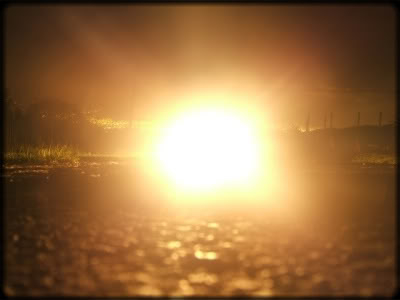
I had to give up the futile attempt of telling the story of alienation; of describing an uncharted state of confusion – newly born since today is new and has never before been lived. Only recently I had begun to understand the system into which I was born, spontaneously thrown into a configuration which is perceived as bizarre shortly after one is capable of analysis. And I am baffled to discover that the very faculty that has allowed me to unveil the absurdity of these circumstances is the cause of the environment I find myself in. The sharp razor of analysis, calculation, planning, prediction… the distinctiveness of our species, the pride of our ancestors: Reason itself, master and artist of modern civilization, creator and ruler of this world of laws and symbols. So powerful, yet so deadly. I had thrust myself into the arms of such deceitful guru, only to become prisoner of a disease… caged in thought, lost in chatter. With the torch of reasoning I explored the corridors of the modern world, I studied the interior of today’s machinery, and I probed the shallowness of our desires. Horrified by what I found, I stood still…. a sun slithered down the gilded sky, cars followed a steady line… waves of intangible information flowed by.
The world is changing. It is evolving before our very own eyes. We are carrying out a plan that we inherited – a plan that has no foreseen outcome but is continued only because of an illusion, perhaps the hope of progress, or some euphoric moment of fulfillment awaiting us in some distant corner of the future. Or is it comfort and laziness, fear of challenging what was given to us? Inertia compels us to accept the system, a system that is clearly cruel, indifferent and disheartening but at least it gives us survival, a chance to carry on with our lives without suffering too much. Nonetheless, this system is expanding beyond our control, we cannot see an end to our technological societies, feeding endlessly from our endless desires. We submit to a system we don’t understand but is presented as trustworthy, worthy of the highest respect… the ultimate goal of collective existence: civilization. And why? Why should I accept this intricate system of highways transporting money-seeking creatures, why should organization be preferred over chaos and spontaneity?
I’ve learned that any set of beliefs is relative to tradition, an environment endowed with the authority of time (or feigned timelessness), a community of believers that reinforce the belief with repetition, indoctrination, in short, education… and based on what, the authority of their opinions, their convictions based on the solemnity of their forefathers’ expressions, and so on, until the very necessity of proof is vanished because tradition has been instituted and a full circle has been completed. Tradition contains the “truth” and that truth was begotten by the unchallenged belief of generations which granted tradition the authority of timeless revelation. I’m not only thinking of religion which is of minor concern nowadays. Tradition in the form of greed, individuality, progress, happiness; any principle by which we can govern our lives. Doesn’t it make sense that our calculating minds, striving for one fulfillment after another, have adopted this behavior after years upon years of learning the same old ways of our immediate forefathers? And can we continue using the moral imperative of “ought to”, we ought to be happy, we ought to be successful, we ought to be reasonable; in modern terms, we ought to be well off. How can we again insinuate some sort of collective ethics, when every purposeful ideal is always biased, wrought by individual preference and thus, completely inadequate for generalization?
In universal terms, in the metaphysical urgency triggered by poetic insight, in silent contemplation that destroys the metanarrative of cosmic history painted by science and rationalism, when the grand picture of the universe is captured in one unified indescribable awareness… in that state which is short-lived but long-lasting… and to view a queue of cars, the sidewalk wet by rain, the sun tainted by clouds, the air still, all these and yet none of these. When nothing seems like a necessity, anything can be challenged, overturned, changed — beauty that has no structure, no rationale
…. a sun slithered down the gilded sky, cars followed a steady line… waves of intangible information flowed by.
“The intellect [as] a local effect of evolution, a flame, perhaps accidental,
which lights up the coming and going of living beings in the narrow
passage open to their action; an lo! forgetting what it has just told us,
it makes of this lantern glimmering in a tunnel a Sun which can
illuminate the world.” Henri Bergson
Revolutionary insights are bound to occur every few centuries. Evidence for this is clear since we stopped regarding earth as the center of the universe nor our solar system as the only existent planetary system; the “island universes” discovered in the early 20th century later became proof that we float inside a great vacuum filled with galaxies and our position is not in any way advantageous: we are merely an anthill in a vastly greater desert. Revelations of this sort change the root of all our understanding of the human being and his position in this strange universe. The above discoveries lead to a re-conceptualization of our place in the material plane. There are other revelations that force us to reevaluate our previous conceptions at a cognitive or intellectual level. Kant believed to have transformed philosophy with the same impact that Copernicus’ theory revolutionized astronomy. However, his philosophy as influential as it is, couldn’t produce the radical transformation its author had anticipated. In more recent times Heisenberg dramatically redefined the future of physics with his Uncertainty Principle, setting a perennial barrier to the accuracy of information we can obtain at the subatomic level. It will be safe to speculate that world-changing insights will continue to appear throughout history.
Because we are so immersed in our own opinions and hold with unswerving faith our convictions, it is no surprise that it becomes difficult for us to accept, much less digest, what new ideas are pointing at. The evolution of human knowledge is constantly pushing for wider horizons, breaking free from assumptions that were once crowned as truths but are in reality only provisional scaffolds that permit the growth of more profound insights. Such may be that case with our idolatry to matter; ever since science usurped almost every field of knowledge proclaiming that epistemological certainty is only possible through objective (that is, physically oriented) evidence. Steadily ever since Einstein tried to unify electromagnetism and gravity there has been an increasing wave of believers in a unified theory of reality; which in closer analysis is a pretension to explain the entire universe, or all that is, by physical mechanisms. It rests on an unproven assumption that can be summarized like this: because we are able to perceive the physical universe with our five senses and technical apparatuses, everything we perceive can be explained from that which we perceive. In simpler terms we are convinced that there exists nothing more than what we are able to perceive or deduct from our perception, and although this sounds like the plainest commonsense, we should carefully rephrase that assertion to: we can only discuss what we perceive. But we should not discard beforehand the possibility that this world, every phenomenon at the experiential level, may be simply a fragment of a vaster and greater reality. This does not imply that that greater universe which we cannot perceive should be a concern to science and philosophy but it simply comes as a warning to our proud advancement of knowledge. My case can be summed up in the following way:
If our awareness and intelligence arose out of earlier biological experiments, its persistence on this planet must only be explained by the advantages it has given to our species. Its function has been to assist the survival of our kind and not as we now presume, to solve the riddles of existence. Intelligence did not arise to survey all the scope of whatever exists but only to aid the organism in its survival with its immediate environment. This may be a total and insurmountable obstacle for the arrogance of science and philosophy; merely because there may be dimensions of reality we are not designed to perceive, causes that may influence the physical universe which are not strictly perceivable nor deducible from physical phenomena. This condition could set an experiential limitation to our knowledge –not unlike the uncertainty principle – forever and ever concealing absolute truth from our grasp and revealing us not as possessors of facts but merely as gatherers of illusions.
It seems to be I am locked inside this excessive silence. That while I look up into the hazy azure of the sky or into the windy skies of night I discover an impenetrable void, a silence that cannot be breached, a solitude that is here to stay. My arms plead with desperation for a sign, my ears are on a pilgrimage in search of a sacred word – a confirmation that life can be trusted. A revelation or miracle that can transform these wild gyrations of nonsense into a lively and trustworthy universe. Long tunnels of agony and atrophy seem to be the destiny of those that aspire to awaken and revive human life from its muddled lethargy. But being trapped inside an inescapable chasm, I have only the ignoble expanse of space to address and all of creation turns its back on me and answers back in SILENCE. I am not insightful enough to interpret my own frustrations, I cannot tell if it is a general trend in this new age or if I stand alone in this inexplicable confusion. Furthermore, the only remedy comes in strings of lyrical eruptions that at first sight seem vague and meaningless, but are in fact projections of the real ambiguity and hollowness that resides deep within. It is unnecessary to find coherence when one is no longer servant to the tyrant of reason, it is superfluous to propound theories when the intellect is too weak to grasp reality. So, the image is inevitable: floating in cold nothingness, silent solitude. A journey through emptiness, a constant motion through space finding every now and then a naked planet, an aura of beauty and patiently collecting the dust of time in expectation of a glorious sun – surrendering to the all-powerful ground of being.
If we must submit to the irrationality of following all logic to its end, conclusions may turn shockingly paradoxical. I once heard that we have chosen our life from the very start and that our experience on this planet is simply the revelation of our original choice. If this were true then the absurdity of our suffering would be justified since we have chosen beforehand to experience it. The question that remains would be: why have we forgotten our original choice? Why does life present itself as an unknown unfolding instead of being the realization of one’s desire? By some obscure mechanism our original choice has been obliterated, life remains a permanent surprise. At first this seems like another form of fatalism except for the fact that we have chosen that predetermination. On the other hand, most people believe that the universe is a spontaneous happening and we must choose our way through the hazards of spontaneity. Our life is the result of all our choices, but how do we ever get to choose anything? I sat down the other day to think this one over and I discovered that my choices are really just reactions to whatever is presented to my mind. From the pettiest choices to the most important decisions I simply obey a feeling, logic or a whim. In all of these cases I am subject to what simply happens inside me. Should I buy a black or blue pen? I wait for a moment, experience a certain sensation of pleasure in black and I buy the black pen. Should I live in Costa Rica or in India, I wait for a moment, a logical-emotional labyrinth emerges in my mind and by the end of this involuntary frenzy, I make my decision. Naively speaking, thoughts are like emotions, they arise involuntarily and by a law of their own. Most people are identified with their thoughts, but if you ask them how they fabricate a thought they must inevitably answer: it simply happens. So, if my decisions are nothing but reactions to what is presented to my mind, what is allowing these perceptions? If we submit to modern scientific thinking, to explain a perception in the human mind we must pursue a long path through Psychology, Sociology, Biology, Evolution, Neurology, Chemistry, Physics, and we will end up with an ultimate theory for the universe as seen by man. In very simple terms, what we experience is the result of the whole arrangement of the cosmos, and if we knew every bit of information about this arrangement, we could predict ourselves. Again, we fall into an unremitting fatalism.
But what’s the use of all this reasoning and the contemporary compulsive adoration to logic and reason?
And to know and see and reassert that we ARE machines, we are machines made out of flesh, proteins, water, enzymes and coded molecules; that we understand the word “machine” but cannot grasp the consequences of this mysterious arrangement:
We can watch him quietly chewing his dinner. His gaze is imperturbable and his thoughts invariably these:
The nothingness that exists in all forms, and the nothingness that is yet to be born.
The modern hero awaits (and this waiting period is interminable) for a fatal threat. This threat is anticipated throughout the cycles of the clock. It is always approaching, never disappearing.
What can he do?
Nothing. Resisting the menace of existence is a futile and wearisome illusion. He will initially find himself in hypertension, guarded against an invisible enemy. Since there is no defence against his opponent, rebellion would represent a defeating madness. Acceptance must be learned and practiced. However, salvation is not achieved solely by the acceptance of one’s own precarious situation. He has no escape, he must sacrifice a distracted and unexamined life in order to become bearer of a strange suffering. He will be the hated antagonist of any unfounded human optimism.
For what?
To cure himself of a malady that is not only his own but also a dormant illness that all conscious beings carry within.
What relieves him?
From the perspective of the world he has secluded himself in an abstract and spurious discourse; from the perspective of his own condition he has renounced his faith in a world of form and substance, he has lost trust in the socially approved states of consciousness. He lives in a mythological world, albeit, his myth has not yet been written nor can it be. He is dispersed in a flux of perception that not necessarily implies an objective external world. His experience cannot be communicated, it does not have the logical structure of a normal human situation.
Is there a light at the end of his tunnel?
From the standpoint of the all-too-human, suicide may appear as the last desperate, but effective, act of liberation, but this won’t be his course. He has selected an ambitious journey: The transmutation of consciousness. An intuition convinces him that the reality we live in is only one of many possible creations; and in the sober creation of less restricted states of consciousness he will achieve his ultimate objective: inner peace.
The problem of Free Will is inextricably linked with a scientific belief. This belief is in itself perhaps older than formal science but nonetheless it acquired great force with the birth and development of the scientific enterprise. It can be stated thus:
Everything in the present is the direct result of the configuration of the past.
Nothing is without a cause. Thus, whatever we encounter in a present state can be explained or understood by its former state and the natural laws involved. If this belief is to be adopted thoroughly, if nothing can escape causality, then anything we experience has a direct cause in the past.
When we bring this kind of reasoning to the debate of Free Will, we can conclude in the following manner:
Psychic phenomena all have a cause regulated and governed by natural biological laws that at present we cannot name them all. Whatever we experience in the present is inextricably linked to a past state of affairs.
We understand Free Will as the ability to make an act or decision independently of any necessity compelling us to choose one thing over another. Stated this way it seems that the act of choosing has escaped the law of causality. But if this is to be rejected by our common scientific understanding of the world, we arrive at a different conclusion. Any decision-making process is only possible when the individual is in a particular situation where (s)he reacts to the evidence or stimuli presented for making a decision or act. This stimulus is the psychic content, patent or latent, that takes part of the decision-making moment. To pick an apple over a banana is the result of the apparition in the individual’s consciousness of past experience with these fruits, past reactions to these that make one fruit preferable over the other. A decision cannot be achieved without the pre-existent conditions for making a decision; that is to say: desire in the individual for eating (something that is quite involuntary), the past experience with the objects and objectives of the decision or act. Bound to memory, expectation, desire, and many other, the decision-making process is dependent on psychic phenomena that arises in the mind without a conscious or voluntary action. When an act of “Free Will” has taken place we remember the act, and the possibility of choosing otherwise, but we forget the requirements for us to arrive at the chosen action. The action was conditioned by involuntary psychic phenomena, something which we do not control and therefore acted out of a necessity towards this stimuli that was presented to us: Desire, Aversion, Memory, Imagination, Etc.
In such a way the problem of Free Will can be reconciled with the idea of causality. And with this knowledge now in mind the upcoming decisions will be influenced by this new awareness. We may doubt at the moment of decision-making in order to prove our putative freedom, but we are still only reactions to involuntary psychic phenomena that permit the processes we call free and voluntary.
However, to understand the laws of the human psyche at the present seems unlikely because of the complexity involved; the apparent arbitrariness or spontaneity of the stimuli that allow our decisions to take place is sufficient to permit our current morality – based on the supposition that we are free agents making responsible decisions – to remain established.
::::::::::::: APPENDIX ::::::::::::::::
The main idea behind this short inquiry is to reconcile two basic assumptions we have about the world.
1. Everything is the effect of a cause. Therefore all effects can potentially be explained or understood by their causes. (A general accepted supposition in our contemporary scientific culture)
2. We are free agents, making decisions independently of any external necessity obligating us to make a certain choice.
These two assumptions we all have in the back of our minds are in stark contradiction. How can we be free if everything in the world is determined by natural laws and follow an unchangeable course? We then would be part of the immutable course of things and all our actions are predetermined since the beginning of time.
If we follow the suggestions of logic, we will conclude that we are nothing but puppets manipulated by the general course of nature’s laws. However, we don’t feel this to be the case. We feel we ARE free and independent.
The above paragraphs attempt to show that we maybe deceived by our belief in Free Will. Simply stated, our decisions are not made by an omnipotent-omniscient ego that at each moment can decide what it wills. Our decisions are based and chained to mental phenomena that arise involuntarily into our consciousness (that is to say it appears quite without our consent, as a cloud would appear suddenly in an open sky). This involuntary phenomena (desire, aversion, fear, tribulation, excitement, anxiety, and countless others) determine the choices we make. Our choices have natural causes that do not depend on us. With this explanation we can find causes for our decision-making lives and discover that we are not as commonly believed: free creators of our destinies.
However, if we can find reason to doubt the first assumption: everything has a cause by which we can know the effect, then Free Will may be conceived without logical contradiction. And it is wise to reassess our dogmatic belief in science and the principles of causality, which may be in the end altogether mistaken.
Free wanderers of the spirit, you astronauts in the lost space of indecision, all of us that have noticed and condemned the irrationality of our age, yes, you passionate survivor that in the mist of these nonsensical years battle through the current of conformity in search of a justification, a raison d’être, a simple satisfaction that will overshadow the ever-lasting presence of frustration.
We are the inheritors of a struggle that has pervaded all of history. Our efforts so essential in the field of human potential must never come to an end. In these complex societies that require even more complex solutions to cure the collective madness, our perseverance must not wane. Even if most attempts to heal the wound of civilization have failed throughout history, the spirit of the rebel will live on as a child of that irrepressible force that commands human existence: an energy that will ask of us to emancipate man from his self-imposed shackles.
Our mistrust in human conventions, ideologies, and reforms should not stop our search for an immediate liberation, a source of enlightenment, a spring of contentment. In peeling off all boundaries we still have a chance of finding a secret treasure in nature, beauty, art, brotherhood, work, love, poetry, even in the darkness of suffering or the maniacal passion of a philosopher, somewhere within these and all inspiring things we may stumble across a beautiful sensation of peace, a harmonious agreement with what is most essential in life.
But what is the most essential?
This each wondering mind must seek but I am sure that with sufficient honesty and perseverance we can find that basic need and satisfy it sanely. Then we may watch our torments wither away and vanish as our reality elevates itself into a more exciting and promising realm.
Allow this vision to settle in:
Long, unanimous cries and shouts into the open sky, not from another fascist’s Holocaust but from an inexplicable mad ecstasy, the long-awaited contact with pure joy.
Existence was always for me a dark place. It was not necessarily depressing or ominous; it was dark because it lacked explanation and purpose. But somehow, after years of purposelessness, I have begun to love life’s obscurity.
There’s something enchanting about the enigmatic — anything that conceals something deeper or unknown is generally very intriguing, like a mask or a symbol. Analysis is the ability to dive below the surface of a thing in order to grasp its inner structure. The purpose of writing is vague and uncertain. Entertainment? Transmission of knowledge? Spontaneous activity? All three are plausible but foremost, for me, writing has a symbolic function. It is the disguised voice of the raving lunatic we all carry inside. Most struggles in life are born from the dissension between our waking consciousness and the nocturnal beast that dwells in the swampy pit of our unconscious. If that treacherous monster had a voice, what would it say? It would probably roar…
If only we had the strength and perseverance to record every fleeting detail. All those frustrated desires, every old man that crossed our path, every wind that lifted a billow of dust before our eyes. What would we discover then? Do we grasp ourselves better in representations; is the mirror’s image our final wisdom?
Will the beast be tamed when he sees his own deformity?



 Beyond Language
You must be logged in to post a comment.