The beauty of traffic


I had to give up the futile attempt of telling the story of alienation; of describing an uncharted state of confusion – newly born since today is new and has never before been lived.  Only recently I had begun to understand the system into which I was born, spontaneously thrown into a configuration which is perceived as bizarre shortly after one is capable of analysis. And I am baffled to discover that the very faculty that has allowed me to unveil the absurdity of these circumstances is the cause of the environment I find myself in. The sharp razor of analysis, calculation, planning, prediction… the distinctiveness of our species, the pride of our ancestors: Reason itself, master and artist of modern civilization, creator and ruler of this world of laws and symbols. So powerful, yet so deadly. I had thrust myself into the arms of such deceitful guru, only to become prisoner of a disease… caged in thought, lost in chatter. With the torch of reasoning I explored the corridors of the modern world, I studied the interior of today’s machinery, and I probed the shallowness of our desires. Horrified by what I found, I stood still…. a sun slithered down the gilded sky, cars followed a steady line… waves of intangible information flowed by.

The world is changing. It is evolving before our very own eyes. We are carrying out a plan that we inherited – a plan that has no foreseen outcome but is continued only because of an illusion, perhaps the hope of progress, or some euphoric moment of fulfillment awaiting us in some distant corner of the future. Or is it comfort and laziness, fear of challenging what was given to us? Inertia compels us to accept the system, a system that is clearly cruel, indifferent and disheartening but at least it gives us survival, a chance to carry on with our lives without suffering too much. Nonetheless, this system is expanding beyond our control, we cannot see an end to our technological societies, feeding endlessly from our endless desires.  We submit to a system we don’t understand but is presented as trustworthy, worthy of the highest respect… the ultimate goal of collective existence: civilization. And why? Why should I accept this intricate system of highways transporting money-seeking creatures, why should organization be preferred over chaos and spontaneity?

I’ve learned that any set of beliefs is relative to tradition, an environment endowed with the authority of time (or feigned timelessness), a community of believers that reinforce the belief with repetition, indoctrination, in short, education… and based on what, the authority of their opinions, their convictions based on the solemnity of their forefathers’ expressions, and so on, until the very necessity of proof is vanished because tradition has been instituted and a full circle has been completed. Tradition contains the “truth” and that truth was begotten by the unchallenged belief of generations which granted tradition the authority of timeless revelation. I’m not only thinking of religion which is of minor concern nowadays. Tradition in the form of greed, individuality, progress, happiness; any principle by which we can govern our lives. Doesn’t it make sense that our calculating minds, striving for one fulfillment after another, have adopted this behavior after years upon years of learning the same old ways of our immediate forefathers? And can we continue using the moral imperative of “ought to”, we ought to be happy, we ought to be successful, we ought to be reasonable; in modern terms, we ought to be well off. How can we again insinuate some sort of collective ethics, when every purposeful ideal is always biased, wrought by individual preference and thus, completely inadequate for generalization?

In universal terms, in the metaphysical urgency triggered by poetic insight, in silent contemplation that destroys the metanarrative of cosmic history painted by science and rationalism, when the grand picture of the universe is captured in one unified indescribable awareness… in that state which is short-lived but long-lasting… and to view a queue of cars, the sidewalk wet by rain, the sun tainted by clouds, the air still, all these and yet none of these. When nothing seems like a necessity, anything can be challenged, overturned, changed — beauty that has no structure, no rationale

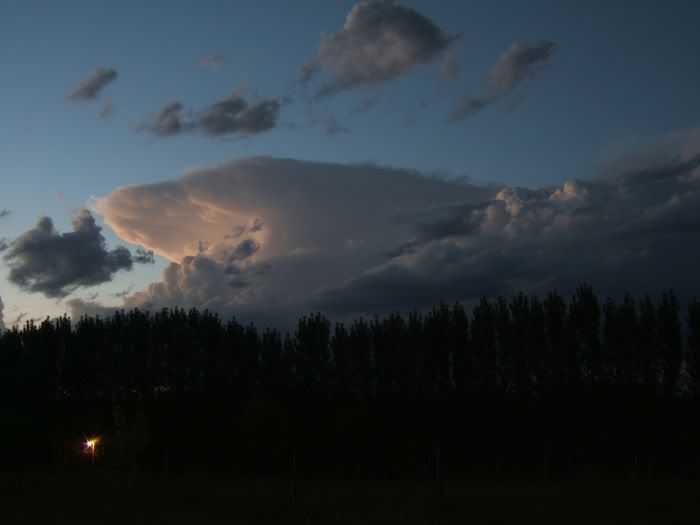
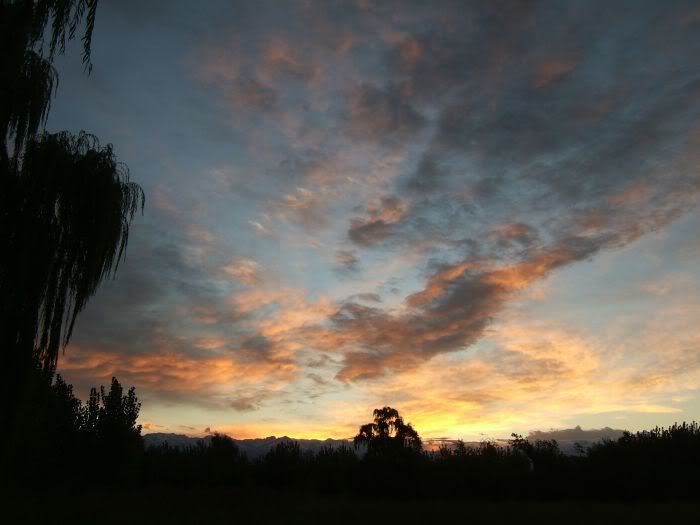
…. a sun slithered down the gilded sky, cars followed a steady line… waves of intangible information flowed by.

Beyond Language BLOG 

WIDER HORIZONS – An essay on experiential limits to truth

“The intellect [as] a local effect of evolution, a flame, perhaps accidental,

which lights up the coming and going of living beings in the narrow

passage open to their action; an lo! forgetting what it has just told us,

it makes of this lantern glimmering in a tunnel a Sun which can

illuminate the world.” Henri Bergson


Revolutionary insights are bound to occur every few centuries. Evidence for this is clear since we stopped regarding earth as the center of the universe nor our solar system as the only existent planetary system; the “island universes” discovered in the early 20th century later became proof that we float inside a great vacuum filled with galaxies and our position is not in any way advantageous: we are merely an anthill in a vastly greater desert. Revelations of this sort change the root of all our understanding of the human being and his position in this strange universe. The above discoveries lead to a re-conceptualization of our place in the material plane. There are other revelations that force us to reevaluate our previous conceptions at a cognitive or intellectual level. Kant believed to have transformed philosophy with the same impact that Copernicus’ theory revolutionized astronomy. However, his philosophy as influential as it is, couldn’t produce the radical transformation its author had anticipated. In more recent times Heisenberg dramatically redefined the future of physics with his Uncertainty Principle, setting a perennial barrier to the accuracy of information we can obtain at the subatomic level. It will be safe to speculate that world-changing insights will continue to appear throughout history.

Because we are so immersed in our own opinions and hold with unswerving faith our convictions, it is no surprise that it becomes difficult for us to accept, much less digest, what new ideas are pointing at. The evolution of human knowledge is constantly pushing for wider horizons, breaking free from assumptions that were once crowned as truths but are in reality only provisional scaffolds that permit the growth of more profound insights. Such may be that case with our idolatry to matter; ever since science usurped almost every field of knowledge proclaiming that epistemological certainty is only possible through objective (that is, physically oriented) evidence.  Steadily ever since Einstein tried to unify electromagnetism and gravity there has been an increasing wave of believers in a unified theory of reality; which in closer analysis is a pretension to explain the entire universe, or all that is, by physical mechanisms. It rests on an unproven assumption that can be summarized like this: because we are able to perceive the physical universe with our five senses and technical apparatuses, everything we perceive can be explained from that which we perceive. In simpler terms we are convinced that there exists nothing more than what we are able to perceive or deduct from our perception, and although this sounds like the plainest commonsense, we should carefully rephrase that assertion to: we can only discuss what we perceive. But we should not discard beforehand the possibility that this world, every phenomenon at the experiential level, may be simply a fragment of a vaster and greater reality. This does not imply that that greater universe which we cannot perceive should be a concern to science and philosophy but it simply comes as a warning to our proud advancement of knowledge. My case can be summed up in the following way:


If our awareness and intelligence arose out of earlier biological experiments, its persistence on this planet must only be explained by the advantages it has given to our species. Its function has been to assist the survival of our kind and not as we now presume, to solve the riddles of existence. Intelligence did not arise to survey all the scope of whatever exists but only to aid the organism in its survival with its immediate environment. This may be a total and insurmountable obstacle for the arrogance of science and philosophy; merely because there may be dimensions of reality we are not designed to perceive, causes that may influence the physical universe which are not strictly perceivable nor deducible from physical phenomena. This condition could set an experiential limitation to our knowledge –not unlike the uncertainty principle – forever and ever concealing absolute truth from our grasp and revealing us not as possessors of facts but merely as gatherers of illusions.


knowledge_in_21st_century

Return to Beyond Language

Awe and confusion swirled together

pain

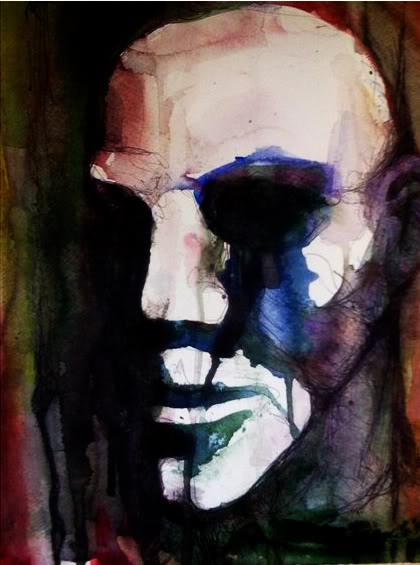
Pain by Hands of Crimson (deviantart)

We fling ourselves out into the depths of this tumultuous motion (there is always an implicit decision to stay alive) – we are agonizing in the effusion of forms, attitudes and energies of this world, we succumb to the simultaneity of all events, approaching a boiling point which will end in a devastating orgasm. This life that with relentless power can lift you to regions of unshakable astonishment will drop you with equal force into the pits of boredom and suicidal retreat. It becomes an experience so intense that all those wonderful insights attained by your constant awareness to the profundity of existing forms can be, and will be, torn apart by the abysmal fissure that comes in between reality and our conceptions. Our epoch has demystified the themes of history, art, philosophy, science – any study that pierces Being and divests it from the shallowness of routine – themes we are engaged in by our simple breathing and acting  in a world that is constantly being measured, recorded, discussed and because of these, it is being doubted more than ever.


Out of the circumstance of standing on the axis of what is to come and while repeating beyond illusion the experience, over and over again, of existing as part and parcel of this monstrous universe – out of all these circumstances there arises a sentiment which remains for the most part unspoken yet when united to the urgency of our desires it wishes to break through as a divine voice, a repercussion that will echo through the immensity of space and time, an outpouring of this vital disbelief that defines our existence; in short, an eternal statement understood and recognized by everyone:


Can all this be real?


Exactly because the world’s diversity can only be matched by its incomprehensibility the human being, passenger in life, is unable to remain in the state of absolute veneration (the all-too-common fear of the unknown) and must distract himself with whatever nuisance is thrown in his way. Fortunately, there is excitement in monotony; there is pleasure in painful depressions.


We are obeying something vastly superior, something that always exceeds our two modern poisons: reason and technology. We aspired to imitate nature with those silly contrivances. We, subjects to our bodies, to history and the course of the planet, we return to bed every night insulted simply because we cannot deceive ourselves much longer: the world we have come out of has created itself and us without the tool of reason; and in that inexplicable unreasonableness it has fashioned machines infinitely superior to our latest technologies – we see it all around us, the biological world, a miraculous product abandoned by the silent God of Purposelessness.


After we finish with this continuous enigma, we open our eyes to challenge again the naked world, to tease it with our actions and desires….
“oh what a world” we say,


and reenter the game once again.


Go back to Beyond Language

Corner’s spiral


Come trace each spiral’s end

the emptiness of every word

fullness of rippling chords

wondering, strange wondering

                      those that once were

where has the smoke of their pipes

          traveled?

To them we were distant dream’s child

a rising vapor over their colossal deaths—

serene nocturnal sounds

Gathering ink droplets

      over prayer’s whisper

and the fall, rushing leap

bottom deep darkness into

deep immensity’s embrace

Violin growth of love

the stream naturally light

flight upon mountainous sleep

crossing threads of cycles and returning

Entering moment’s origin

returning every minute

                       arriving over and over again.

An Attack on Science


Science is based on an unscientific judgment of value. Science and its followers claim that knowledge and truth about the world are only possible through the scrutiny of the scientific method. Therefore, all other sources of knowledge are doubtful, if not, downright mistaken. It eradicated subjectivity from its grand representation of the universe and claims to speak as matter-of-fact and objective as possible.  However, the scientific enterprise has still to prove why we should deal with the cosmos as a problem to be solved; it has yet to answer why knowing is much more important than any other human activity. The great technological benefits we enjoy today are not at all essential; we clearly see the animal world enduring without vehicles or television, or notions such as gravity and entropy, such ‘animals’ even have very complex societies or innate flying abilities. Therefore science cannot claim to be the ultimate route to a better and wiser life, it is a historical phenomenon existing only for the past few centuries and not necessary to life on this planet. In this sense science is morally unscientific; it cannot provide evidence for why a scientific attitude is more preferable than, for example, an aesthetic or nihilistic one. This is simply because science has not been able to predict human emotions or chart our future decisions, it has nothing to say about what we should do; it merely states what is not what should be. 

Scientific-minded people believe themselves to be the most rational minds today. They have associated rationality with one method of inquiry (i.e. scientific method) and have abolished all other sources of data and knowledge. This seems to me more like a limitation than an advantage, precisely because science cannot deal with the whole spectrum of our experience. It works simply on the observable external phenomena and has yet to contribute to an understanding of human consciousness. It pretended for many centuries to get rid of this uncomfortable fact but the shadow of consciousness has crept into modern physics and it is now clear that even basic physical concepts such as mass, distance, velocity, time, are dependent on an observer. In a broader sense, rationality should encompass more than just science and its mother logic, considering that science is narrowly limited by its inability to connect with our whole experience of life. In other words, we are aware of things that the analytic mind cannot formulate. The rational discourse of science is incomplete; it cannot be the entire picture since it lacks insight into our inner life which is as real and undeniable as the external world. For this reason we can learn about life equally as much from a scientific treatise as from a novel, a poem, a kiss or a beautiful landscape. 

(This is not an attempt to invalidate science but simply a reminder that the powerful mystery of life cannot be grasped from one perspective. Those that are dedicated to the exploration of existence must remember: there are no official paradigms; we alone bestow authority to whatever we choose to believe. We cannot limit the cosmos to certain aspects of itself, it is beyond our attempts to reduce it to one knowable thing.)

Liberation

Free wanderers of the spirit, you astronauts in the lost space of indecision, all of us that have noticed and condemned the irrationality of our age, yes, you passionate survivor that in the mist of these nonsensical years battle through the current of conformity in search of a justification, a raison d’être, a simple satisfaction that will overshadow the ever-lasting presence of frustration.
We are the inheritors of a struggle that has pervaded all of history. Our efforts so essential in the field of human potential must never come to an end. In these complex societies that require even more complex solutions to cure the collective madness, our perseverance must not wane. Even if most attempts to heal the wound of civilization have failed throughout history, the spirit of the rebel will live on as a child of that irrepressible force that commands human existence: an energy that will ask of us to emancipate man from his self-imposed shackles.
Our mistrust in human conventions, ideologies, and reforms should not stop our search for an immediate liberation, a source of enlightenment, a spring of contentment. In peeling off all boundaries we still have a chance of finding a secret treasure in nature, beauty, art, brotherhood, work, love, poetry, even in the darkness of suffering or the maniacal passion of a philosopher, somewhere within these and all inspiring things we may stumble across a beautiful sensation of peace, a harmonious agreement with what is most essential in life.
But what is the most essential?
This each wondering mind must seek but I am sure that with sufficient honesty and perseverance we can find that basic need and satisfy it sanely. Then we may watch our torments wither away and vanish as our reality elevates itself into a more exciting and promising realm.
Allow this vision to settle in:
Long, unanimous cries and shouts into the open sky, not from another fascist’s Holocaust but from an inexplicable mad ecstasy, the long-awaited contact with pure joy.

Strangers in the city

As strangers in the city
Their eyes meet briefly in a terrible gaze
In the depths they see the emptiness

A hungerless abyss – terror inexpressible
As the pieces move on the chessboard
History, its strategy unknown and obscure
Layers of reality unfold
As strangers that we always are
Appendixes to a greater immeasurable reality
Suspended in our lonely ignorance

Sharing fleeting glances in our anonymity

You, me & Montaigne

It bugged me. I was looking for a vague unformed idea with the same persistency as you would recall a forgotten dream, a dream you had vividly experienced and now all trace of it is lost except for a blurry intuition that claims it existed and was real. So in the same way, I am looking for an idea I’m not quite sure what it is; but I know that it exists and it is real. The idea has something to do with History. History has been on my mind recently. It is impossible to dismiss history when its presence is unmistakably obvious in the prints of books. There have been many before us. So many that the vast majority have perished within the confines of thier solitude and few or no traces are left of their struggles and dreams. I’m interested in how humans see themselves. It may be called their Interpretation of Life. The fact that we live is obvious and granted. But what we think about life changes dramatically from one skull to the next. With so many distinct opinions I do not worry of finding the correct one. All seem to have a likely possibility of truth. But what is truth anyway? A forgotten quest of ancient philosophers… Our age does not worry about truth. It has lost its relevance; we pay attention to other things. So I’m not looking for truth, I’m sure of that. It has to do more with an understanding of how the human interpretation of life changes throughout history. I’m gathering opinions rather the same way that an entomologist would collect beetles. No beetle is more precious than the others, each one of them exist and are as real as the entomologist that collects them. How to make sense of the numberless interpretations of life?

I think I’m getting closer to my forgotten dream: my unformulated idea.

There are many kinds of beetles in the world. There are more beetle species than there are fish, amphibian, reptile, bird and mammal species put together. How did so different types of beetles arise? Our age explains the varieties of species with the theory of evolution. The theory of evolution has been so popular and successful in explaining many aspects of our natural world that it has propagated over many other fields. Technology, ideas and the development of human societies can all be explained quite clearly from an evolutionary perspective.

The evolutionary perspective


Time is a bitch. We cannot define it, yet our whole lives are tyrannized by the ticking of the clock. Elusive in definition but very real and concrete in practice. Time is a fact. We live in time. Calendars and alarm clocks bind us:

“I need to wake up early tomorrow”

“I’m late for work”

“Let’s meet at five near the fountain”

“Next week is my birthday”

“If I don’t finish this in time, I’m in deep trouble”

And so on…

Time is very real. Listen to your own voices. We mention it every single day.


But we forget about time.


We forget that time is not only seconds, minutes, hours, days, weeks, months and years. It is also decades, centuries, millennia, mega-annums, and giga-annums. The universe is a very old place. It’s been here long before any human ever stood erect. It will probably be here long after every human life has been exhausted.

Awareness of the long extension of time is important to understand the various Interpretations of Life.

That’s how I can begin to make sense of history. Through Evolution in the broadest sense of the word. There has been enough time for everything to evolve. Every atom on this planet evolved from the interior of dead stars, life arose for the evolution of simpler forms to more complex ones, and societies, language, ideas and technology evolve from rudimentary human communities spending enough time together to develop these attributes. Given enough time a lot can happen. This is the Evolutionary Perspective. An interpretation of life common among those living today.

We are bound by time. This interpretation of life helps me interpret the interpretation of life of others before me.

Thales surveyed the world around him and declared that it originated from water

Berkeley surveyed the world around him and declared that everything you perceived is not the real world but only your own mind.

Freud surveyed the world around him and declared that a blind unconscious force called the libido directs human life.

And so on…

Every opinion in your head has a history. Every hair in your body has a history. Every word you say originated somewhere sometime, and if you create something new the long chain of causes behind it supports it. If you adopt the evolutionary perspective, your every move is united to the most distant past.

Now I’m getting closer to what I really wanted to express. Not a theory but a melancholic reflection.

On March 1st 1580, Montaigne completed his ‘Note to the Reader’ for his long and voluminous essays. He set his pen (or feather) down and submitted himself to the currents of history. On May 11th 2007 I opened his essays and began reading in English his ‘Au Lecteur’ translated from the French. Something about that date shook me. 1580. Long time ago. A long time ago this man set to write down his ideas and experiences in countless pages. Four hundred twenty-seven years later I pick up his book and read in the thick darkness of midnight till my eyes dropped with exhaustion. Today I woke up with an idea on the tip of my tongue. Trying to shape it and give it a name. Montaigne, a man dead for four hundred fifteen years, influenced my Monday and if you are reading this, he managed to sneak into your life too; changing the course of your life ever so slightly, making you sit before your computer ten minutes extra than you had planned for.

If you adopt the evolutionary perspective, your every move is united to the most distant past.

Montaigne is an example of a life that has been recorded and has been able to influence people in the future. But the number of people that achieve this is negligible when compared to all those that leave no trace and return silently to the dark abyss from where they came. We like to think that life is Great. That it is worth living and that so much of it is special and worthy of commenting. That is why we meet up with our friends and tell them what we did, how we feel, what we hope for. It is sad and discouraging to think that our most troublesome struggles and our most dazzling joys will be lost completely and in five hundred years they will be of no use to anyone.

We are an island of consciousness engulfed in the ambiguous ocean of time.

I find something else discouraging. Of those millions and millions of lives, the lives of the masses that died in plagues, wars, and famines and remain in the history books only as a number:

8,000,000 dead in the Thirty Years War

75,000,000 dead after the Black Plague

100,000,000 dead during the Atlantic Slave Trade

and so on…

What about their Interpretation of Life. They had an equally valid opportunity of experiencing life, perhaps in the most atrocious circumstances. Their thoughts and yearnings are now lost under the memory of a number.

I’d like to compare all those opinions. The lush forest of conceptions that each skull harbors. There are as many as beetles in the world.

Is there a God?

Is there a soul?

Is there an afterlife?

Is there a purpose in life?

What is matter?

What are the stars?

What is happiness?

Every one has something to say. Every one has a right to that opinion. And every opinion is part of the legacy they inherited. The evolution of all forms and shapes; from the hair in your head to your thinking in verbs, nouns and adjectives. We are bound to the most distant past, perhaps too to the more distant future.

Whatever you do today, think what role it will play in the great course of things. When you pay for a pack of cigarettes, think of the journey the coin is about to embark upon. Perhaps a thousand years from now, that same coin is going to be dug up by a future archeologist and speculate about life at the beginning of the 21st century. Gaze up to the sky and imagine all those that have done the same, some seeing the wonderful creation of God, others the grand excitement of space, and others still, the unbelievable profundity of the human mind. Kiss your lover and wonder when the first human kiss was invented. Eat an apple and speculate from what distant tree it came from. Spit out its seeds and consider that in fifty years a child might be swinging from its tree branches.

Now go, and explore. Be part of the unrecorded history that unwinds daily…

We… post-postmodernists?

Our Age is too near to get sight of its boundaries, it is too early to understand its misconceptions. We are too dogmatic in our denial of dogma, absolutely certain in the impossibility of absolute truth. We refuse categorization, even the relativistic classification nauseates us with its blatant inaccuracy. We have exhausted the map of the expected, we have sailed off the edge of objectivity. Is there enough courage at last to tear open the last unexamined convictions?


Science has detonated such a bright flash in the sky of our conceptions, it left us bleakly trembling under the paleness of the explainable.  Our lust craves for some personal knowledge beyond the downpour of communication.  Yet, we are still too philosophical in the claim that philosophy is futile and irrelevant, too logical while we humiliate the world into meaninglessness.


Every man has always been in error. We scrutinize the lack of breadth in antiquity, humans living under the conditions of necessity. But has the wealth of leisure begotten any real savory experience of the magnitude of the universe? Do we not still live under the dining lamp, stuff our heads with hamburgers and neglect the vastness of space and time only to idle hours of curiosity?


Do we prefer to stand still in opposition to progress or move frantically to and fro in opposition to linearity? Is there much to gain in opposing the current of history? Does the weight of our question collapse under our temptation to doubt?


Why do we seek definition?  How can we induce our subjective universe to submit to our words before we have been able to glance it all? Existence is too chaotic to wear the stale garment of adjectives and deductions. Whatever we seek – if we seek anything at all – lies beyond the fortress of definition.


Let the living eyes of the future bury us with their dead words,

                                                for we will be by then … dead things.