The Problem of Free Will


 Are we as free as we think we are?
The problem of Free Will is inextricably linked with a scientific belief. This belief is in itself perhaps older than formal science but nonetheless it acquired great force with the birth and development of the scientific enterprise. It can be stated thus:

 Everything in the present is the direct result of the configuration of the past.

Nothing is without a cause. Thus, whatever we encounter in a present state can be explained or understood by its former state and the natural laws involved. If this belief is to be adopted thoroughly, if nothing can escape causality, then anything we experience has a direct cause in the past.

When we bring this kind of reasoning to the debate of Free Will, we can conclude in the following manner:

Psychic phenomena all have a cause regulated and governed by natural biological laws that at present we cannot name them all. Whatever we experience in the present is inextricably linked to a past state of affairs.

We understand Free Will as the ability to make an act or decision independently of any necessity compelling us to choose one thing over another. Stated this way it seems that the act of choosing has escaped the law of causality. But if this is to be rejected by our common scientific understanding of the world, we arrive at a different conclusion. Any decision-making process is only possible when the individual is in a particular situation where (s)he reacts to the evidence or stimuli presented for making a decision or act. This stimulus is the psychic content, patent or latent, that takes part of the decision-making moment. To pick an apple over a banana is the result of the apparition in the individual’s consciousness of past experience with these fruits, past reactions to these that make one fruit preferable over the other. A decision cannot be achieved without the pre-existent conditions for making a decision; that is to say: desire in the individual for eating (something that is quite involuntary), the past experience with the objects and objectives of the decision or act. Bound to memory, expectation, desire, and many other, the decision-making process is dependent on psychic phenomena that arises in the mind without a conscious or voluntary action. When an act of “Free Will” has taken place we remember the act, and the possibility of choosing otherwise, but we forget the requirements for us to arrive at the chosen action. The action was conditioned by involuntary psychic phenomena, something which we do not control and therefore acted out of a necessity towards this stimuli that was presented to us: Desire, Aversion, Memory, Imagination, Etc.

In such a way the problem of Free Will can be reconciled with the idea of causality. And with this knowledge now in mind the upcoming decisions will be influenced by this new awareness. We may doubt at the moment of decision-making in order to prove our putative freedom, but we are still only reactions to involuntary psychic phenomena that permit the processes we call free and voluntary.

However, to understand the laws of the human psyche at the present seems unlikely because of the complexity involved; the apparent arbitrariness or spontaneity of the stimuli that allow our decisions to take place is sufficient to permit our current morality – based on the supposition that we are free agents making responsible decisions – to remain established.

::::::::::::: APPENDIX ::::::::::::::::

The main idea behind this short inquiry is to reconcile two basic assumptions we have about the world.

1. Everything is the effect of a cause. Therefore all effects can potentially be explained or understood by their causes. (A general accepted supposition in our contemporary scientific culture)

2. We are free agents, making decisions independently of any external necessity obligating us to make a certain choice.

These two assumptions we all have in the back of our minds are in stark contradiction. How can we be free if everything in the world is determined by natural laws and follow an unchangeable course? We then would be part of the immutable course of things and all our actions are predetermined since the beginning of time.

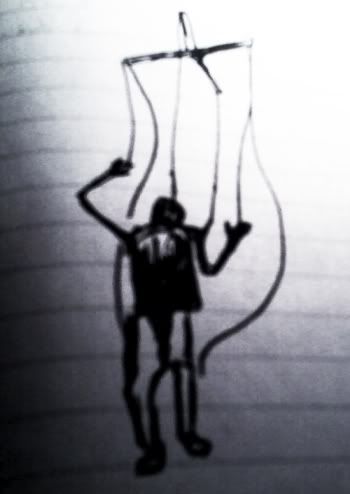
If we follow the suggestions of logic, we will conclude that we are nothing but puppets manipulated by the general course of nature’s laws. However, we don’t feel this to be the case. We feel we ARE free and independent.

The above paragraphs attempt to show that we may be deceived by our belief in Free Will. Simply stated, our decisions are not made by an omnipotent-omniscient ego that at each moment can decide what it wills. Our decisions are based and chained to mental phenomena that arise involuntarily into our consciousness (that is to say it appears quite without our consent, as a cloud would appear suddenly in an open sky). This involuntary phenomena (desire, aversion, fear, tribulation, excitement, anxiety, and countless others) determine the choices we make. Our choices have natural causes that do not depend on us. With this explanation we can find causes for our decision-making lives and discover that we are not as commonly believed: free creators of our destinies.

However, if we can find reason to doubt the first assumption: everything has a cause by which we can know the effect, then Free Will may be conceived without logical contradiction. And it is wise to reassess our dogmatic belief in science and the principles of causality, which may be in the end altogether mistaken.

Isolation


Isolation.

Breathtaking isolating metaphysical estrangement. I am the voice of a prison, an oasis of consciousness locked up in a bottle that is floating on an ocean of beautiful nothingness. There is nothing but myself. But “myself” isn’t human. Consciousness is the moment of absolute silence before sneezing. We are the void that is never heard, we are the undercurrent of a stream that can never rise to the surface; we are motion without name. The unreality of it is not a punishment – it is a promise that nothing – nothing can condemn us to eternal misery. Every pain is a thorn, every joy is a petal: but there is no rose to eternalize them. Life is a dream that will never surrender the mist of its illusion.

We are a particle in that dancing mist,

                         flashing in the light of time,

                                   vanishing in the darkness of boundless sleep.

Liberation

Free wanderers of the spirit, you astronauts in the lost space of indecision, all of us that have noticed and condemned the irrationality of our age, yes, you passionate survivor that in the mist of these nonsensical years battle through the current of conformity in search of a justification, a raison d’être, a simple satisfaction that will overshadow the ever-lasting presence of frustration.
We are the inheritors of a struggle that has pervaded all of history. Our efforts so essential in the field of human potential must never come to an end. In these complex societies that require even more complex solutions to cure the collective madness, our perseverance must not wane. Even if most attempts to heal the wound of civilization have failed throughout history, the spirit of the rebel will live on as a child of that irrepressible force that commands human existence: an energy that will ask of us to emancipate man from his self-imposed shackles.
Our mistrust in human conventions, ideologies, and reforms should not stop our search for an immediate liberation, a source of enlightenment, a spring of contentment. In peeling off all boundaries we still have a chance of finding a secret treasure in nature, beauty, art, brotherhood, work, love, poetry, even in the darkness of suffering or the maniacal passion of a philosopher, somewhere within these and all inspiring things we may stumble across a beautiful sensation of peace, a harmonious agreement with what is most essential in life.
But what is the most essential?
This each wondering mind must seek but I am sure that with sufficient honesty and perseverance we can find that basic need and satisfy it sanely. Then we may watch our torments wither away and vanish as our reality elevates itself into a more exciting and promising realm.
Allow this vision to settle in:
Long, unanimous cries and shouts into the open sky, not from another fascist’s Holocaust but from an inexplicable mad ecstasy, the long-awaited contact with pure joy.

Nocturnal Studies

thebeast

Existence was always for me a dark place. It was not necessarily depressing or ominous; it was dark because it lacked explanation and purpose. But somehow, after years of purposelessness, I have begun to love life’s obscurity.

There’s something enchanting about the enigmatic — anything that conceals something deeper or unknown is generally very intriguing, like a mask or a symbol. Analysis is the ability to dive below the surface of a thing in order to grasp its inner structure. The purpose of writing is vague and uncertain. Entertainment? Transmission of knowledge? Spontaneous activity? All three are plausible but foremost, for me, writing has a symbolic function. It is the disguised voice of the raving lunatic we all carry inside. Most struggles in life are born from the dissension between our waking consciousness and the nocturnal beast that dwells in the swampy pit of our unconscious. If that treacherous monster had a voice, what would it say? It would probably roar…

If only we had the strength and perseverance to record every fleeting detail. All those frustrated desires, every old man that crossed our path, every wind that lifted a billow of dust before our eyes. What would we discover then? Do we grasp ourselves better in representations; is the mirror’s image our final wisdom?
Will the beast be tamed when he sees his own deformity?

Underground Paralysis

I might be mistaken, but I believe there is much to fear in the course of our lives. It is a fear that wine, parties and television might distract from our attention but they will never annihilate it. Most philosophies of despair tend to denounce the ABSURD as an inexorable quality of our advancing lives. It is, in fact, this irrepressible motion forward though cycles of interminable triviality that the despairing existentialist complains about, and makes a living by declaring the banality of earthly life.  It is fascinating to think that in recent times the attitude of wailing has been adopted by many clever writers, and we, as audience, enjoy reading about our impotence and frailty.
Anyway, the fear I mentioned does not arise from the intellectual awareness that the things we do in life have no permanent meaning or from the existenliast´s lack of trust in the frenetic impetus of time. It is a feeling only describable in metaphor, it is only visualized in representations of the deepest horror:
 
You are not moving
not advancing
but the color changes
grey to black
the purest black
the deepest deep
each tick of the heart
marks a step further
into a maze of incomprehensibility
like an universe empty
no stars or galaxies
only a demonic silence
a cognitive paralysis
an underground turbulence
 
You reach out for help
piercing the dark horror
trying to hold on to something
your hand blindly advances
at the end of your fingers
 a river of pain…
having crossed your multi-layered mind
and light-years of voidness:
 
two options,
if you scream you drown
asphyxiated by the thick weariness,
or
you marry silence
isolated indefinitely
in the cruel awareness
of your inexplicable
existence.

The day the universe was reborn

    
Why keep writing in linear and logical fashion?
Writing is the outgrowth of thinking.
It should reflect the features of the human mind, with its desultory and fluctuating discourse.

When the scope of the possible has been exhausted you may turn left where a gigantic mountain separates the desert from the snow. Haven’t you felt all along that lurking behind every monotonous experience an explosive energy awaits to come forth? It is as if a powerful surge of lightning remains dormant in a recondite quarter of our consciousness; behind every yawn of boredom a rapacious thunder of delight seeks an entrance into our deaf lives.
    
Follow the rain into the heart of the storm. Then you will be ready for the revival of the new, the rediscovery of surprise.  As long as there is room for the unknown, as long as red-headed ants surprise you with wonder and interrupt the tyrannical flow of thoughts — there is hope.
    
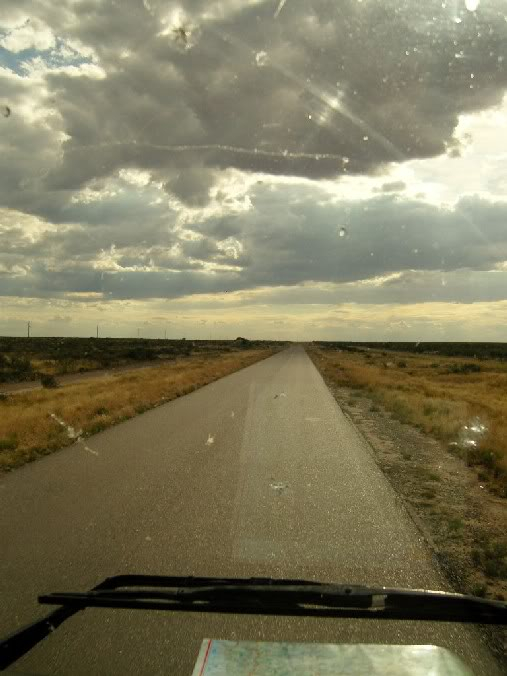
I had begun walking in search of meaning and not far down the road I stumbled across an insurmountable obstacle: mortality. All labors are in vain if they seek permanence. This did not stop me, if I should live in a world where impermanence governs every particle of matter then my actions had to resign any sort of structure, my words had to abandon order. I had to accept the chaos of uncertainty and resume the search. No longer looking for a perennial philosophy but merely for temporary wisdom. For the most profound questions I never looked in books; I was lucky to experience them in other more fundamental objects: in direct contact with the phantasmagorical landscapes of nature or the silent dark of outer space.
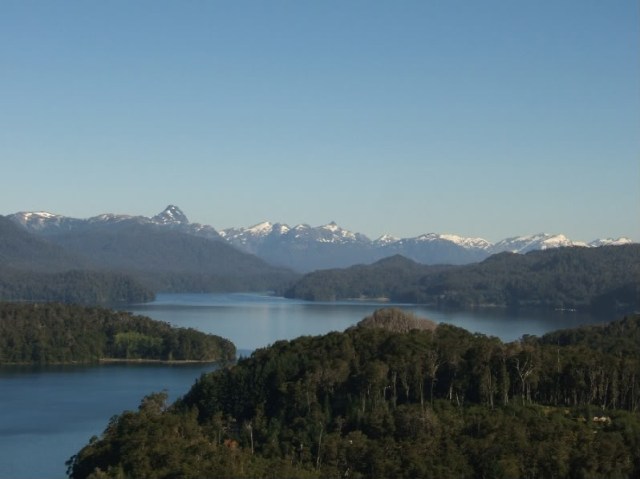
Sinking in rocky jaws
Patagonian mountains
Lakes as seas
near heaven’s azure
the universe reborn
million lights at night
transform every thing
     Living in constant disbelief I could but interpret life as total dream, the whole of existence appeared equally inconstant as the contents of any bizarre dream. Yet I am sure that defining the cosmos by the anthropocentric analogy of dream doesn’t come close to what is really happening — reality is much wilder and exuberant than our speculations. Here and there I found evidence to believe that the hardest task is change: inner transformation. We are never the Archimedean unmovable point around which all things change and evolve — we are similarly watery being flowing from one state to another. Allowing things to change within you, permitting things to grow and decay inside was surely difficult. Getting used to this internal impermanence requires great courage. The reward is priceless: the art of transformation had become the real art of living.
     At night things settle down. The pure transparency of water is swallowed by the black of night and slowly above a blurry streak of light convinces us of the utter strangeness of our condition. The Milky Way, our home galaxy, becomes the symbol of our astonishment.  In those prolonged moments of silence things are perceived differently, we are free to just be as rocks are silently existing at the bottom of a blue lake.
Is it so necessary to formulate our wonder and our wishes?
Immobile (time)
Serene (space)
a rock for ages
deep below
in abysmal Zen
Sometimes I refuse to endure the recurrent agony of dreaming my death. In times like those:
Deserts become too desolate
Mountains intimidating monsters
Cities caging of beasts
Oceans too restless
Home insipid
My grave a terrifying
       inferno
I can only live and die
within my despair
My daemon: despair. My savior: wonder. My meditation: inking a few random words. My sleep: sweet forgetfulness as the rock that rests unperturbed.
I have to ask, is The Search a consequence of despair, or despair a consequence of The Search?

patagonia_lakes

Turbulent Purple

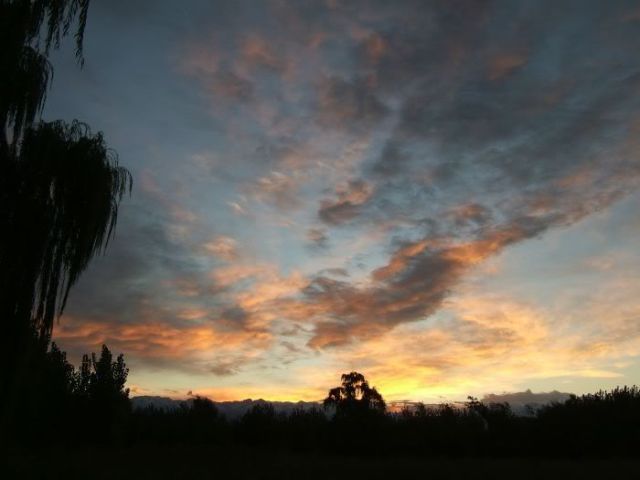
The fiery afternoon had transformed itself into a turbulent purple. How else could I describe it? It had no other name than Turbulent Purple. I am by blind necessity bound to call it by that denomination, I am a slave to that ambiguous name. Leaping in and out the oblivious space of mind, short and poetically vague sensations occupied most of my purposeless time. Without explanation or warning I could read in the papyrus of thoughts scriptures such as these:

           
            Centuries of dancing shadows
            Has the strong wind of fate
            Extinguished Man´s recurrent dream?
 
Ah! From where do all these voices arise but from the nocturnal?
 
How senseless it is to reveal in words the impenetrable mystery of the mind, how lame an attempt to reproduce the wilderness of wonder. The afternoon had turned into a Turbulent Purple and I became sure the existence of written language had no purpose but to express the shock of our encounter with reality — it could never explain a thing. So, without regret I had survived numberless fears of imminent death so I could experience once more the unnatural beauty of nature.
 
Ha! So many years organizing my thoughts so that in my final despair I found every cell in my body to have a life of its own and my thoughts faithful pilgrims in the inhospitable lands of paradox. Therefore I studied my body with care as if it were an extraterrestrial lump of matter and completely gave up the hope of a systematical account of human experience. Then I focused again on the sky and the world was still a turbulent purple. It was not long after this that for the first time I started doubting of the ancient and perennial pillars of art. It seemed to me that if all things go wrong the last desperate redemption would come through art — art had a special bond with the essence of all experience, it embraces the whole multitude of feeling and all genre of action and yet it transcends them all — or so I thought.
 
“Life and death for art” would have been my motto two years ago. But in my rebellion against all dogma the mutiny of doubts turned against my ideals and the sky of my convictions became turbulent — perhaps purple to a spectator of my consciousness. If myths, religions, wars, slavery, races, countries, continents, suns, and galaxies all have an allotted time, art surely is as ephemeral as the rest. Alone and destitute I stood while the echo of a turbulent purple sunset reverberated in the coffins of memory. At last I got rid off the most obdurate preoccupation, second only to death — namely, life no longer lived for art, love, money, fame, joy or by instinct alone; it seems likely to be here for no reason in particular. One last thing remains certain:
 
               Returning from the underground
               Reflections in echoes
               From the pit of despair
               The fountain of wonder
               The irony of this paradox
               From the art of Nature
               Conceived the death of Art
               A dying fire. . .
                       Turbulent Purple
                          turbulent purple

If…

If stories had some sort of reality I would narrate my dissolution amongst the heavenly bodies; if fantasies were not merely fictions I would vanish careless in the wind; if words were not all vain and empty I would tell everyone that life is a bubble of dream and we are nothing but footprints on sand.
If changing the world meant anything I would form a new republic; if truth existed I would refute the philosophers; if god existed I would be fearless to leave this world…
On my 26th birthday. January 7th 2008

City Walls

urban_hermit_poetry

I have abandoned everything
  like a monk with weary eyes
I am a hermit within the city walls
Tall towers of light are only columns of dreams
I have fled from the horizon
            to study the core
I am tired of all the signs –
  In a falling leaf
        the whole universe is summarized.
Don’t wake me up!
Let me sleep in my rich delusions
   Let me be like dust
        that never had a name
            it never spoke a word.

A line of thought

medusa

We haven’t reached the spiritual vertigo of Zarathustra, for in his abundance of knowledge became weary of too much wisdom; nor are we broken down by so much grief as Titus had to endure. We are not too small to be completely insignificant, nor great enough to awake with daily pride. Our real circumstances are somewhere in between the extremities, our toils are not fully tragic or heroic.

We battle through the repetitions of the calendar and if we strive to send out a message, a moral for our collected personal histories, what unclouded expression can give meaning to the facts of our plainer existence? What, for instance, is the final message of the universally acclaimed films of Forrest Gump or Amelie? What feature in their unwinding plots seizes the spectator’s mind-body and synchronizes its fictitious reality with our own living novels? The former film is a wonderful exposition of the Ying-Yang character of any human life, yet in the end the legendary up-and-down events of Gump’s life become simply a background for the truly memorable moments of his life as he describes them to his life-long love: gazing at the stars at night, contemplating a sunrise, running by a crystalline lake, and surveying without distinction the earth and sky. The latter film from the onset exposes a lover of life in her most basic and simple experiences: sticking a hand into a sack of beans or skipping pebbles on water.

For both films, besides the eternal search for love, these aforementioned singular and unpretentious experiences somehow seem to magically justify the turmoil of existence, our inevitable mortality and the lurking solitude that hides away in every human heart.

But while Zarathustra, Titus, Forrest and Amelie lie tranquilly behind the surface of a book’s page or the film’s screen, what is for the true mortal being the climax of his life? When do we find the ultimate recognition of our satisfaction, and if we do, are we able to leave behind forever the racing dream that we have called our daily reality? In other words, once we find a simple reason for our being, can we then allow it to return to non-being?

The search for fulfillment needs not reach the extremes of intellectual inquiry of Nietzsche’s Zarathustra or the emotional explosiveness of Shakespeare’s Titus, perhaps our day to day lifestyle will be enough if it be endowed with sufficient awareness, a recognition that behind our meals, offices hours and snoring sleep an intuitive beauty akin to what Forrest and Amelie felt in their rudimentary experiences is available to us.

After all, is not the triviality of the familiar set before the grand theater of stars and galaxies? Is it so surprising that this world as it is, is just enough, that we need seek no more, progress no further, attain nothing more…

Had today been the last day of this earth and we the living saw and participated in the last scene of this earthly play, would not every last smile turn into a divine sign, every last meal a most sacred ritual, every last conversation a most treasured bible, every last kiss a most unnatural miracle.

The potential of the ordinary is quite extraordinary once we acknowledge how rare and marvelous is our neglected existence.