Terror and Indifference


Formulate my desire
O’ World of Wonders!


The diversity and variety is astonishingly intimidating. We can choose from numberless alternatives and attempt to satisfy the most serious question mankind has ever asked: 

What should we do? 

What, amongst infinite possibilities, should we do with our life? A life uncertain and finite but nonetheless it is here – we breathe the nectar of life! And with this monumental gift who has satisfactorily guessed what we should do with it? 

Are we certain we are capable of battling with that question, the pinnacle of all morality? Aren’t we more like frightened little creatures led astray by the currents of uncertainty in the vast ocean of incomprehensibility? 

Isn’t it easier for us to admit that our lives have no definite course, no preordained commandments; that the heaven of our ideals is blank without purpose, empty of constellations that could guide us through our erratic nights? 

What is left when we stop pursuing the specter of a deceased spirituality, what do we find but a total dimension of nothingness? 

Open to multiple interpretations, Nietzsche wrote: 

“He who fights with monsters should be careful
lest he thereby become a monster.
If you gaze long into an abyss,
the abyss will also gaze into you.” 

Is he speaking of the abyss of meaninglessness or perhaps of purposelessness – or the emptiness of being that is in our constantly escaping existence?

That vast open ocean of emptiness in which we float and sink incessantly is terrifying and hideous. Once we renounce any definite course in our lives, what is left but the constant terror of the unknown…?

 But swim and swim in the treacherous waters of solitude and when you face the monstrous shadow of the universe, bleak and senseless, pray you will have not renounced everything for nothing ––

 That in that terror of being alone
religion-less and closing into death
you might stumble upon a Liberation:
that crushes your hopes and rewards you
with a dauntless indifference
to the horrors of existence

On death

death_essay

When melancholy, sadness and despair conquer our spirit the threat of death becomes less intimidating to a point that we sometimes see death as an ally – a liberator to our suffering. On the other side of the spectrum, when we are merry, invigorated and hopeful death appears with a different mask – it is an interruption to our joy, it is a usurper to our happiness. The same event takes on two (perhaps more?) different appearances, it is relative to our disposition.

When speaking abstractly we can assume and dictate the effects that death will impress on us. But for anyone that has come close to falling into that tenebrous black hole will readily admit that there are no principles by which we can predict our reaction in such a frightful encounter. Sad or happy we can panic under the threat of death, happy or sad we can receive it gratefully. Only our last moment will tell.

Death is inevitable and whether we have given it any consideration we must eventually face it – unfailingly. Some consider, like Plato’s Socrates, that philosophy is a preparation for death and with its aid one might regulate the attacks of fear and panic that are commonly associated with death. To be honest I don’t think philosophy is enough to vanquish the instincts of our physical organism – something greater and stronger than rationality is needed to subjugate our most ingrained fears.

Death will sweep us all with equal force,

“…it is too late to be wise, that in any case it would serve no purpose,

for the same abyss will engulf us all, wise and foolish alike, sane and mad…”

E.M. CIORAN

The thought and speculation of death cannot dominate us otherwise we would never leave our beds in dismay of the unpredictable and unknown external world. But we must become accustomed to the fact that we must one day leave this inexplicable world, our possessions will cease to belong to us, our life only a faint memory in those that were near us. This is the most difficult task in our lives: to surrender our life – submit it to the unknown.

Paradoxically death has more hold of us when we live than when we have perished. There is so much tension and energy spent in conserving our possessions, our opinions and ideals, our friends and lovers; securing them from the forces that will take them away from us that we are beaten and exhausted in the battle to retain what is dear to us. All this expenditure of energy, all this effort is our refusal to acknowledge the possibility that things are not in our control and that these things will perish as certainly as we will. This struggle makes us live defensively, always on the guard against what we don’t expect, against the threat of what will dissolve the forms of life we’ve become attached to.

Has any remedy been suggested to counterattack this tendency of being attached to things? Let each one of us find his/her own answer. I’m only tempted to share a thought that has come of late:

We will find LIFE when we can let go of life.

When we stop resisting the impetus of Nature towards change and re-form, admitting that ever-flowing stream of variations, and in abandoning our frenetic attempt to seize the flux – we might be able to make that leap into the chaotic Unknown and discover that death is not reserved only for the end of this journey. We experience death each day – every second as the present trickles away from our grasp and a new and infant reality is presented to us perpetually – we continually enter a terra incognita insofar as we leave the carcass of the Known that is buried buried in the graveyard of the past.

We… post-postmodernists?

Our Age is too near to get sight of its boundaries, it is too early to understand its misconceptions. We are too dogmatic in our denial of dogma, absolutely certain in the impossibility of absolute truth. We refuse categorization, even the relativistic classification nauseates us with its blatant inaccuracy. We have exhausted the map of the expected, we have sailed off the edge of objectivity. Is there enough courage at last to tear open the last unexamined convictions?


Science has detonated such a bright flash in the sky of our conceptions, it left us bleakly trembling under the paleness of the explainable.  Our lust craves for some personal knowledge beyond the downpour of communication.  Yet, we are still too philosophical in the claim that philosophy is futile and irrelevant, too logical while we humiliate the world into meaninglessness.


Every man has always been in error. We scrutinize the lack of breadth in antiquity, humans living under the conditions of necessity. But has the wealth of leisure begotten any real savory experience of the magnitude of the universe? Do we not still live under the dining lamp, stuff our heads with hamburgers and neglect the vastness of space and time only to idle hours of curiosity?


Do we prefer to stand still in opposition to progress or move frantically to and fro in opposition to linearity? Is there much to gain in opposing the current of history? Does the weight of our question collapse under our temptation to doubt?


Why do we seek definition?  How can we induce our subjective universe to submit to our words before we have been able to glance it all? Existence is too chaotic to wear the stale garment of adjectives and deductions. Whatever we seek – if we seek anything at all – lies beyond the fortress of definition.


Let the living eyes of the future bury us with their dead words,

                                                for we will be by then … dead things.

Cuando la belleza muere


La vigilia de los días se compenetra con el letargo de las noches. Somos criaturas que inventamos nuestra realidad. Construimos elaboradas ficciones como una imperturbable Historia del Mundo. En ardorosa adicción caímos frente la autoridad de nuestras convicciones. Nos afligimos por la deleznable calidad de nuestra existencia, morimos un poco con el ocaso de cada experiencia. Ignoramos la relatividad de nuestras creencias y la monstruosidad de nuestros prejuicios. Vivir es conocer este juego, esta chispa que brevemente ilumina la insondable oscuridad y luego regresa a la fuente de su origen.


Miremos sin miedo la condición en que vivimos. Somos pequeñas vibraciones en la inagotable turbulencia del oceánico universo. Si pudiéramos ver la evolución cósmica de catorce mil millones de años en un minuto, podaríamos ver las estrellas nacer y morir como lucecitas en un campo colmado de luciérnagas, un movimiento hipnótico como el del agua, una transformación perpetua sin destino previsto ni lamentaciones innecesarias, un baile alternado por luz, vació y tinieblas. ¿Seremos la culminación de tal proceso? Somos parte indiscutible de él pero no esencial. Nuestro heredado antropocentrismo nos hace resistir tales posibilidades.


El recorrido de nuestra especie es fugaz e inasible. Nuestras alegrías y penas se concentran en este pequeño glóbulo de piedra, metal y fuego. Tenemos una pasajera oportunidad para cultivar un asombro por nuestra milagrosa y contingente existencia, retar siglos de timidez especulativa que consideran al humano, con este cuerpo simiesco, como el único ente vivo capaz de inteligencia y de satisfacer el propósito del cosmos.


¡Se vive con la colgante certeza sobre nuestras cabezas de una realidad impermanente e insubstancial! ¿Acaso no vivimos en nuestros sueños con vehemente convencimiento de que enfrentamos verdaderamente esas situaciones ilusorias, nos llenamos de terror cuando no podemos correr en casos de urgencia o regocijamos en el encuentro con seres queridos muertos — no es nuestra convicción en la vigilia la misma cuando transcurrimos por los días en miedo o felicidad por las revelaciones del mundo? ¿Qué medida tenemos para considerar uno más real que el otro? La memoria nos insinúa constancia en nuestro mundo dominante de vela y tal vez tenga razón. Pero cuando cerramos los ojos en terminante cansancio, este mundo despierto se desvanece en negro olvido.


Lo cierto (? juzguen Uds) es que nuestras transitorias experiencias son capaz de transportarnos a realidades no cotidianas. A un plano de consuelo donde todas las cosas bellas que evocan la inspiración y la admiración deben también morir, pero en su muerte se resucita otra belleza: la constante transformación.


Awakening…

All around us are men and women with an undeviating will to pleasure. Their objective in life is the satisfaction of meager desires, propelled by an uncreative submission to the ideals of a corrupt and aimless society. It requires little effort to see all around us the living examples of these words. Yet, we are not here to blame them. What makes us suppose we have the correct view to human life, the right solution when dealing with the difficulty of desire and satisfaction?

The first quarter of a century in life is, perhaps more so than those subsequent, an utter experiment. We come into this world in blind ignorance and we are shown the world as viewed by those before us. The great majority of mankind treats life quite naturally and naively. We hardly suspect any flaws in the outlook of our elders and accept without any resistance the narrowly circumscribed rules and laws of human conduct and the petty and mediocre aspirations of the average Homo Sapiens. Driven by an unbearable fear of uncertainty and insecurity, tossed to and fro by the oppressive instinct of self-preservation and procreation – our kin is in many regards cowardly and selfish. So how can we blame ourselves if we simply follow the command of our inner nature? We cannot without persistent effort modify the channel prescribed for us by the aeons of evolution of numberless generations that came to this planet and left, most of which lie in the impenetrable darkness of prehistory.

When we raise our heads over the insipid realm of tradition and conventionality our eyes become aware of much more than what was initially revealed to us. When we come of age and start discovering our own individual truths the entire meaning of being alive is transformed and molded by the lessons of our experiences. Reverence and idolatry to the prevailing systems are abandoned. If this is achieved all our past knowledge is held in doubt and the exciting adventure of existential discovery begins.

Our eyes awaken from a long slumber and diffidently we make our first steps on the path that leads us away from norm and habit. We begin unraveling the wondrous secrets of consciousness. Our body, language, plants, clouds, stars, galaxies, worms, butterflies, religions, oceans, history, electricity, sound, science, food, air, sleep; all become subjects of our interest. They are no longer the common elements of reality; they become mysterious, inexplicable yet familiar things that were always so close to us. We had forgotten to silently observe them, to try to grasp them as they play their role in the majestic theater of life. The conformity that was inherited from our elders is no longer viable in this world of endless surprises and immense dimensions. Our ears open their gates to the wisdom of all the ages, the army of knowledge conquers our passivity, and we engage in the ceaseless hunt for objects of curiosity and awe.

We are no longer:

Oblivious of the fact that the earth wanders in a void like a mote of dust in invisible air.”


But far from separating ourselves from the concreteness of human experience, we still share in the gaiety of human relationships, in the familiarity of eating, sleeping, working and loving. These things are in themselves equally amazing as the wonders we find in the natural world.

This vision is not too far from our current lives. It is in fact as plainly human as the animosity and tragedy we find in our news. The terror that strikes our senses every day as we open a newspaper is not something that should discourage us. For any living organism life is an ongoing battle. To be alive means to be menacing, brutal, ruthless, aggressive, for life is the activity of survival. Everything in this universe tends to dissipate and destroy complex structures such as ours. The ability for us to stay alive in such a threatening world is not only proof of the cleverness of organic cells but also of our conscious ability to overcome the hostile forces that obliterate us.

“To be alive is to be in a perpetual state of war.”

With so much aggression in us we should not expect to be a thoroughly kind and benevolent race. Every organism in the animal kingdom has won its place by displacing those that could not endure the challenges imposed by the destructive forces of nature. The necessity of war is a fact of nature. But as humans, we can read this differently and we should pronounce it loud and clear, to the belligerent leaders of this world: “Let there be war only if this means let there be LIFE!”

The meaning of war would radically change if we start seeing it from this point of view. Each day survived is a victory celebrated! It’s an accomplishment we should be celebrating every day, rejoicing in the subtlety of being, the fascinating oddity of breathing and dying.

Finally, if pleasure is all that we seek; it is what gives us pleasure that makes all the difference. If our insatiable craving strives only for the material comforts of modern day life I’m afraid so many people will fade away without ever turning their heads and discovering the radiant fountain of wonder that the universe delivers to whoever becomes its beholder.

LIVED EXPERIENCE


Melancholy towards the self-destructive tendency of all creation is perhaps the most common trait in the images of the poets. There is to be found both frustration and excitement in the disappearing of all things. We become disappointed with the passing away of the things we cherish but there is always the seduction of resurrection urging us to keep our tear-drowned eyes open to discover what novel creation comes forth from destruction. The transit of days is unavoidable yet it appears as if we encourage their dissolution by ignoring the small miracles that constitute the realm of human existence. The chest in which we store all our memories is sadly not buried in the depths of a recondite island where it can be dug up by some daring explorer. Even if it were possible to leave a map to our most intimate experiences with the record of words, the explorer will never rescue the living spring of our lives but only sterile fossils that portray nothing of the effusion of lived experience. He will find only scraps of descriptions and explanations signaling to things and events, never the chest itself with the treasure of life. The chest that contains life as we alone experience is coiled inside our brains and it will perish mercilessly with our own destruction.

We experience a secret we will never get to share.

What sort of material do we put inside this isolated chest? That’s a matter of personal decision. In history we find a hierarchy of values presented by the most clever thinkers and writers. Each pretend to have found the quintessence of life. They speak of knowledge, god, morality (virtue), and love principally as the sources of most profound joy. But how are these things of any value with the awareness of their ultimate death in us? For these things exist only through us: they are born and die in us.

It is then not surprising to see our age waning in the enthusiasm for an ultimate goal in human life. We seek small and individual goals in this disillusioned world. Nothing of ever-lasting duration is conceivable anymore; we paradoxically live for all the things that die. Neglecting the temptation to feel depressed by this fact our perseverance is not yet defeated; and we continue to make our tortuous journey through a reality of constant change.

In a civilization with no universal interpretation of what life is to be, the free-spirited explores the potential of existence with new experiments carried out each single day, unveiling tiny miracles never again to be experienced, as he recites in the hollow confines of his soul:

Insignificant and transient experiences,

Profoundly and joyfully—lived.

On Art or the Philosophy of Art

earthborn_2020_pablo_saborio


Art is perception. Perception with meaning. Meaning that goes beyond the insipid realm of words. Philosophers have in vain struggled to define reality. Careful consideration will prove this to be the most absurd conundrum. By definition, the only objects we can define are words. The act of defining is providing an object of reality a corresponding word to name it. Words are sign posts. They point to something other than themselves. Existence is not a word. An attempt to define it is as impossible as to receive nutrition by naming all the ingredients in the plate of food in front of you. Knowledge is not words. Knowledge is to grasp the meaning behind the words. If it were possible one day that, at the peak of our scientific and philosophical endeavor, we attain awareness of all the processes of nature and biological life we may set up a (sign post) model of the whole of reality with words and mathematical formulas, all we’ve done is created a new universe, a replica of this one in our heads. We wouldn’t have defined reality, we would have reproduced it. Reality does not have a meaning, it is meaningless. The only objects that have meaning are the man-made. Or more precisely, meaning comes through as man is The Beholder of the World. A tree does not have meaning, it is not false or true, it just is. Veracity and falsity are only found in our propositions about things, not in things themselves. By nature we are beings that dwell upon Meaning. We are in love with the quest of finding an image of ourselves. We want to become contemplators of our own intimate nature. As the highest quest in life is to know oneself through and through we create mental images of ourselves. For once we have a complete image of ourselves we surpass it, we are new individual with a new knowledge, in short, we are born again.


The objects of art pursue this conquest. They speak to us in perceptions of form and color. They illuminate the objects of our world and their relationship with ourselves. They are, in the highest sense of the word, philosophical. For philosophy. in the most naive sense, is reflection. The Objets d’art reflect the world the surrounds us and is hidden within us, they provide a laboratory for transforming our being. Art materializes into the physical world unspoken intuitions that make up our inner constitution; we bring forth into the world a mirror that reflects our cavernous soul. With the images of art we can shape our mind, for our mind is like a block of marble. The art of life is to mold this sculpture; it is the process of transformation that is at the heart of life itself.

The Faith of Science

The relentless attitude of the modern sceptical mind is based on an unexamined faith which lies at the root of their scepticism. After the great success of the scientific method in uncovering the mechanisms of the natural world and in the application of its discoveries for the development of an ever-increasing complex technology the modern mind has adopted an unquestioned confidence in regards to the scientific method of acquiring knowledge. Bluntly speaking, we have adopted a new faith that can be put forward as this: The only true facts about the world are those that we can observe (i.e. experiment). This statement does not imply that all facts of our knowledge are derived through observation and analysis. It is a premise which has not been proven, therefore it can adequately be called a faith. A faith that claims that any and all content of our knowledge can be only valid if scrutinized through the filters of the scientific method. This was forcefully impressed in our culture after the success of scientific progress since the time of Galileo and Newton. There was a natural tendency for this since people were trying to battle with the superstitious beliefs that have governed human minds for centuries upon centuries, beliefs that were adopted by mere faith and with complete disregard to the evidence afforded by the natural world. Facts about our natural world that could not be adequately supplied by the Church and its dogma were substituted by the conclusions of men and women of science. This attitude towards the natural world lead to a triumphant suppression of religious opinions in realms that do not belong to them. This turn of events has been priceless in our understanding of our world and of ourselves. But this attitude may run into a dangerous corner. The successful method of science can oppress our understanding of life and seclude us to facts that escape the scrutiny of science. Not all questions that arise in the human mind can find a solution by the means of science. Believing this is turning science into a blind faith. The existential and ontological questions of who are we, what to do with our lives, our moral behavior, of God and the like questions are assessed on evidence that is not available to the categories or branches of science. When dealing with the whole panorama of problems we face as human beings we can adopt a more mature position when looking for the elusive answers. Blind are those that make themselves believe that all the answers are found in the workings of science or the precepts of a religion. Our age requires a more mature consideration of the problems of existence and will need nothing but sincerity when dealing with these matters. The facts of science must be taken as symbolic representations of the processes we find in the world and religious symbolism is equally a representation of truths, but of those that are unable to be expressed in language. Religious symbolism is only a means to convey truths that cannot be grasped by the analytical mind. Charles H. Long in his book Alpha dealing with the early myths of creation makes a just assessment in the value of both outlooks, those of science and (religious) myth. “… the problem of dealing with the fundamental relatedness of the mythic and the scientific. One mode cannot replace the other; the generalizing method of scientific thought cannot do justice to the life of man as he experiences it, and the mythic mode of apprehension cannot remain so specific and concrete that it becomes esoteric or subjective.”

I can imagine a prolonged application of this attitude in dealing with the mysterious in life will lead to a clear agnosticism in many matters. It will not dismiss the myths of religion as false but as intangible expressions of the human experience; and so with science, it will regard its achievements as a representational and abstract model of reality which is, as practical and useful as it is, only an approximation.

The troubled individual of our age

For the short period that is our recorded history we have identified myriad of diseases. The causes of many of these ills were unknown until the development of science came along. But nowadays besides the countless evils that are deleterious to our body the great majority of humanity suffers from a disease of a quite different nature, this virus is psychological. This problem has been touched by many people and I will here briefly mentioned a few that come to mind. Albert Camus did not clearly recognized the cause but was able to recognize the problem and he gave it the name of the Absurd (The Myth of Sisyphus). The absurdity by which this disease is manifested has enslaved us in convulsion. Philosopher Alan Watts thinks the cause of this discomfort is a sense of mistaken identity. Basing his metaphysical principles in the teachings of Oriental philosophy, he thinks the human being is alienated from himself and his external world because we take ourselves to be an “isolated ego locked up in a bag of skin.” The true self is not this illusory ego but the whole cosmos. This, Watts thinks, is the cause of our incorrigible dismay. The discoveries in the fields of sociology suggest that the individual has lost his identity, whatever this is, by the growing enterprise of capitalism and globalization. For this reason, the contemporary human being feels worthless and insignificant in the whole scheme of things. Buddhism, in its very intricate doctrines, recommends meditation as a healing source for the wounds created by the chattering of the mind. The problem of thinking too much can be the cause of our interminable sufferings. Psychiatrist Viktor E. Frankl thinks that the motivating force in human beings is the search for meaning. Our inability to find an everlasting meaning for our daily drudgery may be the cause for our bewildering states of mind.

This disease is not apparent at all times nor is it clearly definable. That is why we hardly speak of it and most of the times we ignored it and select different causes for its origin. If I had to give it a name it would be called the Invisible Enemy. And we are fighting almost daily against this unknown adversary, throwing punches in the dark so to expect recovery from our repulsion for this life. The motives of this invisible enemy are unknown, his presence is only detectable by his fury which is measured by our general discomfort. Suffering too much from the Absurd can almost lead you into insanity. In fact, it is almost acceptable to assert that recognizing the Absurd as a real feature of reality is your ticket to lunacy.This paradoxical sentiment can be traced in all aspects of our human life. The moment when all past, current and future endeavors seem empty of purpose, your aspirations and your struggles are viewed from above as vain, and the insipid idea of surviving is felt to be downright ridiculous. We feel as if we have no control and there are no answers to be found. I am sure that most of you may have had this feeling, however transitory it may be. But imagine to be under this spell day in and day out. Suicide seems to be the last solution but even then the idea of suicide seems worthless to the captive of this invisible enemy. No, the person goes on, feeling the awkwardness of living for the future and rebels against it but unfortunately he’s labeled by the eyes of our society as a madman. Perhaps it is time we start sympathizing with these alienated people.

As with all diseases the first step is to identify the cause of the disease. Since this matter is kind of elusive we must explore it from all different points of view. It is necessary to bring into view the findings in philosophy and metaphysics, psychology and sociology, religion and spirituality, and the sciences of the human body. Perhaps one day we will be able to answer this impending question; who are we fighting against?

Knowledge as Art

Chinese_art_and_poetry

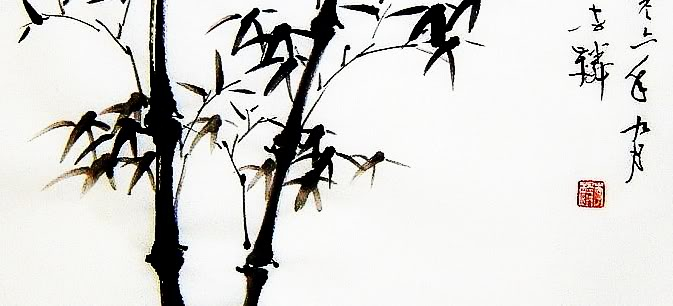
Rhythm is something we can never define. It is the course by which all things move. We can never define it because it is always teaching us and we are never commanding it. The motion of the stars, the shivering of leaves by the touch of the wind, the steps of a tango dance, the flush of a toilet, the swerving molecules of air that produce sound, all things under and beyond our scorching star have a rhythm and this we can never define, because it never stops. It has not ever been static but constantly destroying present configurations for novel melodies of motion. The object of art in Chinese culture tries to capture this rhythm, by placing it on a canvas as an extension of the same rhythm the artist is trying to imitate. The Chinese artist follows several principles to ascertain his human creation of the natural flow or rhythm found in nature. He strives first of all to contemplate the natural rhythm of things by a non-forced condition they call wu-wei (non-action/ no effort). Once they become effortlessly aware of this flow of things, they then try to paint being themselves nothing more than a natural extension of this same flow they have discovered in the things of the world. When we turn to the West, we find another activity which resembles this attitude in Chinese art: it is called the pursuit of knowledge. The aim of knowledge is that of portraying an accurate image of reality in a set system of words and definitions. It has to proceed in a way that will imitate the rhythm of nature, through it we are doing nothing but a replica — we are duplicating our experience. We create a painting of the functions of the world by tinctures of words, sentences, definitions, propositions and paint all this on our minds– serving as a canvas. The ultimate goal of knowledge is not a set of coordinates for reality – it is not just a map of experience: it is a representation of all that comes through our senses, our awareness, and creates a picture of it in our minds with the artistic tools of language and logic.