Scavenger of the Rare


Be careful, o’ solitary wanderer
Of what the night might do to you
-Forgotten proverb


(a short fictional narrative)

Under the asphalt of the night when the city streets have become a monotonous geometry of angles and straight lines, where a few strangers roam free in silence and private thought, it was then when the Scavenger of the Rare was struck by an indisputably bitter truth, a truth so bizarre and easily forgotten that none seem to notice it. As all mortal days have it, today was simply a cascade of neglected events (meaning that little or no attention had been paid to the events of another perishing day), the Weight of Time had unstoppably dissolved every single phenomenon of the decaying present into an ambiguous mist of past: the world is burning, slipping away and nobody cares! But to return to this already desultory narrative, the Scavenger of the Rare having spent the whole day seeking among the Fragments of the Impermanent for signs and symbols of a meaningful and trustworthy existence, but had by some unfortunate circumstance stumbled upon quite the opposite evidence. The truth he discovered, perhaps re-discovered for it is easily forgotten, was that…

A brief parenthesis is here peremptorily required. The “truth” that will soon be expounded is by no means easily understood. Millennia of ineffective thinking have putrefied the meaning of the word truth and therefore some elucidation on this matter is necessary. Even though in this day and age faith in the possibility of truth has nearly disappeared, there still remains the concept of truth as a statement made in language that accurately reflects the state of affairs it refers to. A more ambiguous definition is virtually impossible, but a general sense can be rescued from that definition. In other words, Truth is equated to words rightfully employed. But my long conversations with the Scavenger of the Rare and our long (frightfully long) speculations into the nature of truth have convinced me that mankind has been deceived for far too long in this matter and a serious revision is needed in the world of epistemology. However, the Scavenger of the Rare nor myself are at all interested in clarifying human existence, instead I believe we prefer to obscure it. But for the purpose of this short narrative I’ll have to explain the background of the words here employed so as to convey a wider context of meaning.

Words. They are close to being the most elusive phenomena of human existence. Words don’t have a meaning in themselves, I recall the Scavenger once saying. We impart meaning on them by constantly associating them with our perceptions. After long years of repeating words after the same objects of perception we arrive at a stable vocabulary. But when we have a novelty in our perceptions, a never-before experienced feeling or intuition, we are unable to communicate this new experience in terms of an old (and therefore inadequate) language. The truth of the experience precedes the statement of the truth. This is how Scavenger’s experience should be read, we’re reading into his state of mind rather than a statement of his mind.

So to continue… He discovered in himself a truth that made him shudder and nearly vomit in that dismal revelation. The street light was red and he waited rather impatiently for it to change its color so he could cross the street and examine an abandoned shoe on the other side (he had a peculiar pleasure in spending time with the most trivial of human objects). Two cars glided in front of him as he remained magnetized with the sight of that footwear, pondering perhaps the history of its wretched condition. But as the time came closer when the red light would fade out and in its stead a green caricature of a man would magically appear, an uncomfortable sensation sprung at the kernel of his being. In the complexity of an instant: red-light, impatient-waiting, shoe-on-the-other-side, cars-passing-by, breeze-on-the-face, twinkling-bright-stars, quiet-thinking-strangers, parallel-streets, right-angled-corners; in that jumble of sensations that occupy the minutest millisecond, a volcanic revelation took place that challenged his sturdiest notions of human reality. Oh! I wish I would have the ability to fully recall my friend’s eloquent recounting of this episode. Here I can only rescue a few scraps from the tenebrous archives of my memory.

The Scavenger of the Rare approximately said, “It was as if the entire planet had split into two and I was suspended between the two halves, lingering in a dumbfounded state, relentlessly asking myself if I were not dreaming or altogether dead! I conceived it clearly, nay, FELT it lucidly how mistaken we all are. Slowly I recovered my senses to find myself still standing at the edge of the sidewalk. The city, if city I could call it, had transformed itself into an enormous chessboard and every individual walking in their quiet monologue I saw as hollow puppets following invisible commands that the authority of routine had imparted upon them. I understood to the very marrow of my bones how gullible we all are, how we’ve demolished all potential in the human realm by reducing our lives to this civil existence, believing too firmly that we ought to live for this type of civilization, as if human life could only strive in the conditions we now find it. The question of why we find most of us walking on sidewalks, going to work every Monday and talking to ourselves endlessly is most naturally answered by our submission to the authority of tradition, an authority whose power comes from our believing in it. If we didn’t believe in it, it would cease to have control over us.”

The Scavenger uttered such words in terrific excitement. I remember his wild eyes soaring from one end of the room to the other as he practically relived the earlier portion of that significant evening. Before his sudden departure, he added,

“I had to come here and tell you all this for fear that I might forget it tomorrow and return to the sidewalks and crosswalks. I might wake tomorrow and return to the same systematical squandering of time, through barren alleys and among neglected benches under clouded skies. But since the revelation, I feel these, also, to be utterly meaningless activities even if they remain outside the stock of normality. No matter what activity I choose for my life I will make it a tradition and inevitably become a slave to it. I would care less if a lightning struck me dead right now. Yet in discovering this so-called truth there is one reason that still makes me laugh in despair and it is this: how little is solved with the discovery of our mental slavery.”

In haste he disappeared from my sight and left me in a prolonged state of silent bafflement. It has been a few weeks since I last saw my friend, the Scavenger of the Rare, yet I’ve kept a rigorous watch on the weather conditions of our locality and fortunately there have been no electrical storms since his disappearance.
The Perfect Death

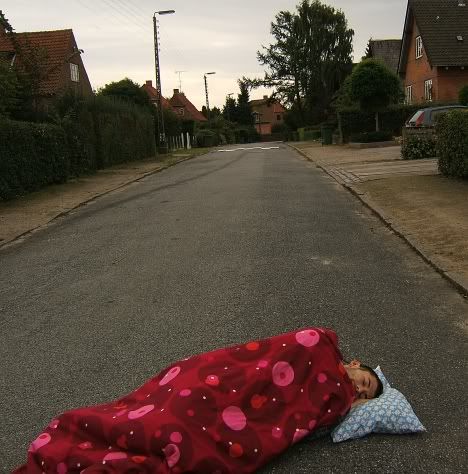
Sleep is the perfect death
How I enjoy to fall asleep
‘Tis as-I-leap and fall
into that gentle abyss
So gentle a Death
that it does not kill me
for I still am
        yet I know not
                     where

A prospect of madness


Would you call me mad if I can confess of a certainty in the prospect of the future, even when I fully acknowledge that the vicissitudes of Time can easily outsmart the most rigorous mathematical prediction; yes I was sure that in ten years’ time I would be looking back to this very same day – today – as the fantasy of a naïve child’s imagination that mistook the nature of reality for that of a game: haven’t I erred in my conviction that life is best lived through the transformation of its contents into those poetic representations that plunge me into an ecstatic state of mind, in other words, in trying to grasp life by its tail by scrutinizing every tottering thread of Time had I not missed the meaning of reality by inspecting it too minutely, too unsparingly as to leave out of the range of my investigations the global experience of existence?

I saw in that Delphic vision a day when all these conglomerates of experience that surround me today would be no more than the debris of a vanished Past, a trivial irony that would have no more power to excite my cynical laughter. That day will come when I rent a paltry hotel room in Belgrade, killing my time with a lousy inexpensive hooker and when night comes I will stare despairingly at the ceiling wondering if abandoning my youthful delusions was a wise choice, since by then I would have purged myself of any prospect in the road of human creativity and would be living in the pulsation of every naked minute, suffering like every other human being in the claws of the beast of existence. And every so often I would glimpse outside my window to see a crumbling civilization and I shall utter words such as these:

Withered petals gliding down
Breaking from their cone
Into scattered puddles in the street
Let each petal leave my rose
Each desire run away
All sorrow, regret and concern
Vanish below –
What is it to me that we must die
Why should I carry the burden
Of Fate’s indifference to us?


Contemporary observations

If Kafka’s works became so renown for expressing a sort of futility in life, a conformist frustration with the operations of society; it must be a sign that people have shared in this same suffering. Each generation must have some idiosyncrasy that the most representative writers get to explore and express. What peculiarity belongs to the early years of the 21st century? It’s hard to imagine any human ever devoid of The Search, a hunt for something, whatever it may be—considering we are desiring animals. So desire (fulfilled or frustrated) will always be playing a role, but the conditions where it arises are different each time. Our age’s most predominant traits are the expansion of technology, communication and the understanding of the cosmos through science. Everybody still eats, sleeps, fucks, travels, watches sports, marries, gets divorced, believes in God or no god. The difference now is the scope of our vision, enlarged by the aid of technology and science. There is still uncertainty in what the ideal politics should be (not unlike the Cold War era), and the optimal economic doctrines (aren’t the world poverty rates an alarming setback in our hopes for the success of a free market economy?). Life nowadays is an acceleration of pleasure. Society rears a career-hunting crowd TRUSTING in the utopia of happiness through material well-being. How long will it last, will natural resources outlive our greediness? Or will human immoderation cause the demise of our consumerist ideals when global warming or another oil crisis takes hold of the world? And when we turn to the individual’s inner life can we claim we have gained greater interior harmony with the easily accessible pleasures that technological entertainment affords us?

Within the human skull

Human Skull

There is a voice inside
A tongue that never goes dry
The discourse, the clattering
The endless commentary
Under our thin hairs
Echoes of words, so many words
Life is raped of its simplicity
Every object has a name
Who can resist the force of opinions
Rotting in his inert monologues
Behold this eerie creature
Whose existence is ruled by
thought

Strangers in the city

As strangers in the city
Their eyes meet briefly in a terrible gaze
In the depths they see the emptiness

A hungerless abyss – terror inexpressible
As the pieces move on the chessboard
History, its strategy unknown and obscure
Layers of reality unfold
As strangers that we always are
Appendixes to a greater immeasurable reality
Suspended in our lonely ignorance

Sharing fleeting glances in our anonymity

POEM ii

POEM  ii

Why do I feel I must carry
in distress and despair
the weight of the universe
                       heavily laid on my back
 
How can I ignore the monumental,
the towers of suffering all life
must sooner or later endure
                       and perpetually misunderstand
 
How can silence substitute
the boundless pain in every
instant of transience,
                          every day and night
 
Inexpressible this senseless world!
But a spark of total nirvana
when submerged in this chaos
                         I let everything go…

POEM i

POEM  i

In every metamorphosis there is
a symbol of the eternal resurrection,
the thousand faces of a timeless world
                                   born forever anew
 
As we drift aimlessly within
the corridors of a flickering instant,
in the huge vaults of time immemorial
                                 Man asleep, awakens!
 
But the amnesia of the cosmos
eagerly consumes our monuments,
of a civilization new and wild
                               imprisoned on earth
 
If we escape from the shackles
of our legendary blindness,
above these clouds of galaxies,
                             darkness becomes light.

Modern Mythology

What’s commonly regarded as the religious sentiment will always find expression in the human realm. Even in our time when the theology of the great religions of the West have been reduced to mythologies, since they have been outsmarted archeologically (bones have been found of human ancestors from nearly two million years ago, long before any Adam or Eve), anthropologically (the themes of the Scriptures are common motifs found in many earlier human cultures), and cosmologically (the view of the earth as middle of the universe has been sufficiently refuted by modern astronomy); even in this time when a literal meaning of the symbols of Christianity, Judaism and Islam are no longer reasonable, there will be an urge to fulfill the role of religion in the hearts of the skeptic modern human being. Even men and women that find the universe absurd, meaningless, godless and pointless have a general sensation that life is too powerful to bear (expressed in their despair), and from that sensation arises a NEED to express this overwhelming power. In some cases such men and women finding no meaning in their lives produce the most striking works in art, literature and music because even the act of expressing one’s own disillusionment with the world turns into a life-guiding and therapeutic activity.

In this new and unprecedented age in the course of human history when all authoritative divine guides to our lives are lost, we still share a common heritage that has shaped and is shaping our lives as a living species. By this I mean the process of development from the womb to a self conscious adult organism. This individual history is shared by all and our minds have been deeply impressed with this organic development which finds expression in our adult life through dreams and symbols (see Freud and Jung). Through symbols we find the surest way to express the non-discursive knowledge of our subconscious minds, a reality everyone holds within his or her own mind. What these symbols seem to be pointing at is a reunification with a totality we have lost. In biological and psychological terms this can be viewed as the separation of the baby from the mother’s womb at the moment of birth and later as the baby develops self-consciousness in its first years, creating the identity of the ego and the external (not-me) world. Some psychologists suggest (like Fromm) that this is the cause of our need to love, to be reunited with the blissful TOTALITY we experienced as infants. I think, perhaps, because of this common experience we all share as infant human beings, mythology and religion arise as a path to find this reunification with what we once belonged to.

Now, throughout history religion has most aptly been expressed in the symbolism of poetry since the symbols of the aesthetic are open to more than just a rational way of thinking. The entire mind is engaged in the apprehension of symbols, providing a more complete entrance to the individual’s inner life. Perhaps this is why science is received coldly by many today because it cannot fulfill the role of a rich mythology addressing not only what is rational in the human being but also what is intuitive, emotional and the like.

The human need to find expression of his intimate experience of the cosmos is not a theory since history supplies us with sufficient proof that this has been a solid fact. Virtually every society and civilization that this planet has harbored believed in some mythological view of the universe.

The question now lies in what form will the new mythology take shape? How will the modern human express his undeniable connection to this powerful universe in terms that are accepted by our current intellectual standards, based on skepticism, pragmatism and scientific inquiry?

The answer will not be hard to find since we share with former times, if not more vehemently, the wonder for existence as such, now that science is exponentially revealing the scope and depth of this universe and the miraculous operations of the human body and mind. The task will be for people to appreciate these facts not only in a dry rationalistic way but in a more engaging relationship with the deeper mystery all these facts are uncovering.


(This short-essay has been strongly inspired by Joseph Campbell’s insightful gem of a book: Myths to live by)

Poem in rain and cosmos


Why must raindrops fall
and stir my soul like Debussy’s piano,
delirium in an orchestra of round ripples
each droplet unites with the puddle
in this unknown street of Nygårdvej
Why can I not resist this temptation
Of studying the motions of a
                                           fluctuating universe

I raise my head a few meters
a different world comes into view
a realm so close but so inexplicable
of these men and women of modernity;
so you see two worlds bound together
One as ancient as numberless time
The other new by cosmic comparison

And worst of all, I must confess
this thing frightens me above all:
the road mankind has fashioned for itself,
that relentless evolution of man’s world
not long ago we lived flat on a finite earth,
now the cosmos has expanded to insane proportions
we are a micro-dot in a cold dark shadow

Are children aware of our ancestral roots
before we were in trees, but now
riding in motorized wheels
is there a Nostradamus among us
who will reveal the end of our obsessions,
or will it never come to an end,
like this puddle should turn into ocean
                                       if these drops from heaven
                                                                   never cease to fall.