The troubled individual of our age

For the short period that is our recorded history we have identified myriad of diseases. The causes of many of these ills were unknown until the development of science came along. But nowadays besides the countless evils that are deleterious to our body the great majority of humanity suffers from a disease of a quite different nature, this virus is psychological. This problem has been touched by many people and I will here briefly mentioned a few that come to mind. Albert Camus did not clearly recognized the cause but was able to recognize the problem and he gave it the name of the Absurd (The Myth of Sisyphus). The absurdity by which this disease is manifested has enslaved us in convulsion. Philosopher Alan Watts thinks the cause of this discomfort is a sense of mistaken identity. Basing his metaphysical principles in the teachings of Oriental philosophy, he thinks the human being is alienated from himself and his external world because we take ourselves to be an “isolated ego locked up in a bag of skin.” The true self is not this illusory ego but the whole cosmos. This, Watts thinks, is the cause of our incorrigible dismay. The discoveries in the fields of sociology suggest that the individual has lost his identity, whatever this is, by the growing enterprise of capitalism and globalization. For this reason, the contemporary human being feels worthless and insignificant in the whole scheme of things. Buddhism, in its very intricate doctrines, recommends meditation as a healing source for the wounds created by the chattering of the mind. The problem of thinking too much can be the cause of our interminable sufferings. Psychiatrist Viktor E. Frankl thinks that the motivating force in human beings is the search for meaning. Our inability to find an everlasting meaning for our daily drudgery may be the cause for our bewildering states of mind.

This disease is not apparent at all times nor is it clearly definable. That is why we hardly speak of it and most of the times we ignored it and select different causes for its origin. If I had to give it a name it would be called the Invisible Enemy. And we are fighting almost daily against this unknown adversary, throwing punches in the dark so to expect recovery from our repulsion for this life. The motives of this invisible enemy are unknown, his presence is only detectable by his fury which is measured by our general discomfort. Suffering too much from the Absurd can almost lead you into insanity. In fact, it is almost acceptable to assert that recognizing the Absurd as a real feature of reality is your ticket to lunacy.This paradoxical sentiment can be traced in all aspects of our human life. The moment when all past, current and future endeavors seem empty of purpose, your aspirations and your struggles are viewed from above as vain, and the insipid idea of surviving is felt to be downright ridiculous. We feel as if we have no control and there are no answers to be found. I am sure that most of you may have had this feeling, however transitory it may be. But imagine to be under this spell day in and day out. Suicide seems to be the last solution but even then the idea of suicide seems worthless to the captive of this invisible enemy. No, the person goes on, feeling the awkwardness of living for the future and rebels against it but unfortunately he’s labeled by the eyes of our society as a madman. Perhaps it is time we start sympathizing with these alienated people.

As with all diseases the first step is to identify the cause of the disease. Since this matter is kind of elusive we must explore it from all different points of view. It is necessary to bring into view the findings in philosophy and metaphysics, psychology and sociology, religion and spirituality, and the sciences of the human body. Perhaps one day we will be able to answer this impending question; who are we fighting against?
Unreadable Poem

Dipping the feather of the imagination in the ink of eclipsed wounds
The insufferable stupor of recovery staining our creative dejection
Our rejection, the simple negation to all illusory satisfaction
When have I seen you clearer dear Nature
is it not when I carry swollen heart beats
The last, at last, strength necessary
to care not and endure resignation
And you carry on, bemusing me
with irrevocable volatility
savagely laughing
at all temporary maxims
That life loves to refute these
Make our grasping unsuccessful
Our understanding a tragic comedy
How to deal with your sickly transitoriness
Lasting revelry enjoyed by the nihilistic-spirited
The few that cultivate their joy in uncertain opinions
Friendly foe! Bearer of all things, transform my low seductions
Turn me into a prisoner of your suspicious truth, and my words
                                                                                                        will never draw near it.

Knowledge as Art

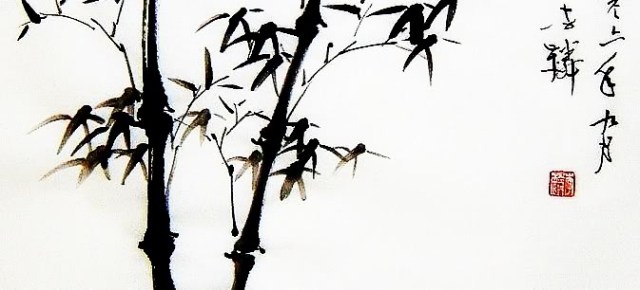
Chinese_art_and_poetry

Rhythm is something we can never define. It is the course by which all things move. We can never define it because it is always teaching us and we are never commanding it. The motion of the stars, the shivering of leaves by the touch of the wind, the steps of a tango dance, the flush of a toilet, the swerving molecules of air that produce sound, all things under and beyond our scorching star have a rhythm and this we can never define, because it never stops. It has not ever been static but constantly destroying present configurations for novel melodies of motion. The object of art in Chinese culture tries to capture this rhythm, by placing it on a canvas as an extension of the same rhythm the artist is trying to imitate. The Chinese artist follows several principles to ascertain his human creation of the natural flow or rhythm found in nature. He strives first of all to contemplate the natural rhythm of things by a non-forced condition they call wu-wei (non-action/ no effort). Once they become effortlessly aware of this flow of things, they then try to paint being themselves nothing more than a natural extension of this same flow they have discovered in the things of the world. When we turn to the West, we find another activity which resembles this attitude in Chinese art: it is called the pursuit of knowledge. The aim of knowledge is that of portraying an accurate image of reality in a set system of words and definitions. It has to proceed in a way that will imitate the rhythm of nature, through it we are doing nothing but a replica — we are duplicating our experience. We create a painting of the functions of the world by tinctures of words, sentences, definitions, propositions and paint all this on our minds– serving as a canvas. The ultimate goal of knowledge is not a set of coordinates for reality – it is not just a map of experience: it is a representation of all that comes through our senses, our awareness, and creates a picture of it in our minds with the artistic tools of language and logic.

The origin of inspiration


The eternal present.

Unfortunately, it is only a transitory condition I am sometimes blessed to experience. Far from being a permanent state in which I find myself, it is only in those divine moments when I’m totally centered and aware of all that surrounds me that I sigh, and stunned, silently pronounce my astonishment.I had such a moment today. Perhaps all too short since I started to describe it in words. I was traveling from my home to my work office. I’m lucky enough to pass every day through a mountain hill that allows me to view part of Costa Rica’s central valley in great depth. The view is breathtaking. Mesmerizing. It is enormous, the mountains, the slopes they produce and the great plains that support such monstrous pieces of rock. I wasn’t sitting near the closest window to such view. Between my eyes and that sight that I so highly revere was a row of bus seats and in one of them sat a young girl. Far from obstructing my view, it enhanced it. I could compare the magnitude of the geography I was musing with the size of a small human being. The result was that of making the sight even greater in size and significance, and my identity as a human smaller and humbler in feeling. It was there, the greatness, the majestic quality of this planet and it faded slowly as the bus rode down the hill and entering a nearby town. Now only a memory of it remains but the power by which it shook me still permeates my breath…